
Voir Dire Questions: A Trial Attorney's Guide (+ Examples)
Strong voir dire questions fall into four categories.
Voir dire questions are the questions attorneys ask prospective jurors to surface bias, prior experience, and attitudes that could affect a verdict. The most effective ones are open-ended and indirect — they reveal how a juror thinks rather than asking them to promise they'll be fair. They fall into four categories: background and experience, attitudes and beliefs, relationship to the case, and case-specific hypotheticals.
Anyone can ask a juror, "Can you be fair to both sides?" The juror will say yes. That answer is worthless, and the lawyer who relies on it is selecting a jury blind.
Good voir dire questions do something harder. They get a stranger to reveal the attitudes and experiences that will actually drive how they read the evidence — without the juror feeling interrogated, and without triggering the social instinct to declare impartiality. That is a craft, and it's learnable.
This guide organizes voir dire questions into the categories that matter, gives concrete examples you can adapt for civil and criminal cases, and is honest about the one thing questioning alone will never do.
Key takeaways
- The four question categories: background/experience, attitudes/beliefs, relationship to the case, case-specific hypotheticals.
- Open-ended beats yes/no. "Tell me about a time…" reveals more than "Can you be fair?"
- Hypotheticals surface bias a juror won't admit to directly.
- Questions are bounded by ethics and court rules — in Florida, Rule 1.431 and the Rules Regulating The Florida Bar.
- Questioning has a ceiling: it depends on what a juror is willing — and able — to disclose about themselves.
What makes a voir dire question effective?
Effective voir dire questions are open-ended, non-leading, and designed to reveal a juror's framework rather than collect a promise. The single most common mistake is asking closed questions that invite the socially expected answer.
Three rules separate questions that work from questions that waste your limited time:
- Open over closed. "How do you feel about lawsuits over money?" pulls real attitude. "You can set aside any feelings about lawsuits, right?" pulls a nod.
- Indirect over direct. Few jurors will admit bias against police, doctors, or corporations on request. Ask about their experiences and views and let the bias surface on its own.
- Follow up. The first answer is rarely the useful one. "Tell me more about that" and "What led you to feel that way?" are where the signal lives.
A juror who says "I can be fair" and a juror who describes a bad experience with an insurance company are giving you two very different pieces of information. Only one of them is useful.
The four categories of voir dire questions
Organize your question plan around four buckets. Each targets a different kind of bias risk.
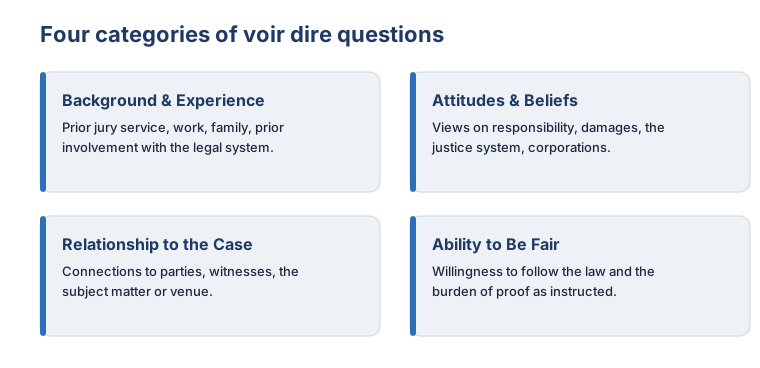
1. Background and experience questions
These establish who the juror is and uncover prior experiences that correlate strongly with bias — especially prior involvement with the legal system.
- "Tell us a little about yourself — where you work and what you do day to day."
- "Have you, a family member, or a close friend ever been a party to a lawsuit? Tell me about that."
- "Have you ever served on a jury before? What was that experience like?"
- "Have you or anyone close to you ever been the victim of a crime? Accused of one?"
- "Have you ever had a strongly positive or negative experience with police, doctors, or insurance companies?"
A juror's history as a plaintiff, defendant, witness, or victim is one of the most reliable correlates of how they'll judge your case.
2. Attitudes and beliefs questions
These surface the societal attitudes that shape judgment without requiring the juror to admit prejudice.
- "Some people feel there are too many lawsuits these days. Where do you fall on that?"
- "When something goes wrong, do you tend to think it's usually someone's fault, or usually just bad luck?"
- "How do you feel about money damages as a way to make up for a serious injury?"
- "What's your view on personal responsibility — how much should people be expected to look out for themselves?"
- "Do you think the justice system is generally too tough, too lenient, or about right?"
3. Relationship-to-the-case questions
These screen for the conflicts that support a for-cause challenge — connections to the parties, witnesses, lawyers, or the subject matter.
- "Do you know any of the parties, the attorneys, or the witnesses I've named?"
- "Have you read, seen, or heard anything about this case before today?"
- "Do you have any specialized knowledge of [the industry / medicine / the type of product] in this case?"
- "Is there anything about the nature of this case that would make it hard for you to sit as a juror?"
4. Case-specific hypothetical questions
These are the most powerful category. A hypothetical that parallels your facts lets you watch a juror's framework operate without triggering the impartiality reflex.
- (Civil / personal injury) "Imagine a company knew about a safety problem and decided fixing it was too expensive. How would you feel about that?"
- (Criminal defense) "If the State brings charges against someone, does that make you think they probably did something wrong? Be honest — a lot of people feel that way."
- (Med-mal) "Some people believe doctors should almost never be second-guessed; others have lost trust in the medical system. Where are you?"
Note: Keep hypotheticals close enough to your facts to be predictive, but not so close that you're arguing the case or "pre-trying" it — courts and opposing counsel will object, and the rules cabin how far you can go.
Voir dire questions for criminal vs. civil cases
The categories are the same; the emphasis shifts. The table below shows where each side typically concentrates its questioning.
| Case posture | What you're probing for | Sample angle |
|---|---|---|
| Criminal — defense | Presumption-of-guilt bias; pro-prosecution attitudes; trust in police | "Does a person being charged make you lean toward thinking they did it?" |
| Criminal — prosecution | Distrust of law enforcement; reluctance to convict | "Could you return a guilty verdict if the evidence supports it, even if it's hard?" |
| Civil — plaintiff | "Too many lawsuits" attitudes; damages skepticism | "How do you feel about awarding money for pain and suffering?" |
| Civil — defense | Sympathy bias; anti-corporate attitudes | "Would the fact that one side is a company affect how you weigh the evidence?" |
In Florida, how much of this questioning you conduct directly versus the judge depends on the court — see the voir dire process for how the questioning phase fits into selection, and for-cause vs. peremptory strikes for how the answers turn into removed jurors.
What questions you should never ask
Some questions are off-limits or counterproductive:
- Questions that pry into protected characteristics as a basis for striking — race and sex-based strikes violate Batson v. Kentucky, and improper questioning invites a challenge.
- Questions that argue the case. Voir dire is for selecting jurors, not for opening statements. Courts will shut down "pre-trying."
- Closed questions that lead the witness. "You'd agree a verdict has to be unanimous, right?" teaches nothing.
- Anything that contacts or pressures a juror outside the courtroom. The Rules Regulating The Florida Bar prohibit ex parte juror contact.
The ceiling of voir dire questioning — and what gets you past it
Here is the honest limit of every question in this guide: voir dire only surfaces what a juror is willing and able to tell you. Jurors underreport attitudes they sense are socially unacceptable, and they are genuinely poor at recognizing their own biases. The juror most dangerous to your case is often the one who answers every question "correctly."
That's why questioning is necessary but not sufficient. A juror's public record frequently tells you what voir dire can't: years of social-media posts critical of insurers in a bad-faith case, a voter and donation profile that signals strong ideological priors, prior litigation history, the demographics of their community. Reviewed compliantly — publicly available information only, no contact with the juror — that record turns your question plan from a fishing expedition into a targeted interview.
This is where PeerProbe fits. It compiles social media intelligence, voter registration, court history, and neighborhood demographics into a single Juror Bias Score™ for every prospective juror, calibrated to your case type and delivered in real time. You walk into voir dire already knowing which jurors warrant your hardest questions — so the limited minutes you get go to the people who matter, and the answers you do get land against a fuller picture.
Frequently asked questions
What questions are asked during jury selection?
Attorneys ask about a juror's background and prior legal experience, their attitudes and beliefs on issues relevant to the case, any relationship to the parties or witnesses, and how they'd react to hypothetical scenarios that mirror the facts. The judge usually asks preliminary qualification questions first. The goal is to identify bias that justifies a challenge.
What are good voir dire questions?
Good voir dire questions are open-ended and indirect. Instead of "Can you be fair?", effective questions ask jurors to describe experiences and views — "Tell me about a time you dealt with an insurance company" — so attitudes surface naturally. Strong questions also use hypotheticals that parallel the case to reveal bias a juror wouldn't admit to directly.
Can attorneys ask jurors about their political views?
Generally yes, where the views are relevant to bias in the case, and within the court's limits. Attorneys may not, however, use answers to strike jurors on the basis of race or sex under Batson v. Kentucky. Florida courts control the scope of questioning, and the Rules Regulating The Florida Bar prohibit improper or off-limits inquiry.
How many voir dire questions should I prepare?
Prepare more than you'll use, organized by category and priority, so you can adapt to a judge's time limits. Many attorneys build a tiered plan: a core set for the whole panel, follow-ups triggered by specific answers, and case-specific hypotheticals held in reserve. The exact count matters less than having the right follow-ups ready.
Do jurors have to answer voir dire questions honestly?
Yes — prospective jurors answer under oath, and dishonesty can be grounds to set aside a verdict. But honesty isn't the whole problem. Jurors routinely fail to disclose biases they don't recognize in themselves, which is why questioning alone is an incomplete tool and why attorneys supplement it with permissible pre-trial research.
Conclusion
Voir dire questions are the most direct instrument a trial attorney has for finding bias, but only if they are built to reveal how a juror thinks rather than to collect a promise. Organize them by category, lead with open-ended and hypothetical framing, and follow up relentlessly. Then accept the ceiling: questioning surfaces what jurors will tell you, and the most consequential biases are the ones they won't. The attorneys who win selection pair sharp questions with a fuller picture of who they are questioning.
See how PeerProbe scores every juror before you ask a question →
Sources: Florida Rule of Civil Procedure 1.431 (jury / voir dire); Florida Rules of Criminal Procedure 3.300–3.330; Rules Regulating The Florida Bar; Batson v. Kentucky, 476 U.S. 79 (1986); ABA resources on voir dire and implicit bias.
Frequently Asked Questions
Related articles
The Voir Dire Process: How Jury Questioning Works
What is voir dire and how does the process work? A trial attorney's guide to jury questioning, challenges, and timing — with Florida-specific rules.
What Lawyers Look For in Jury Selection
What do lawyers look for in jury selection? The six things attorneys actually evaluate in a juror — bias, experience, attitudes, demographics, and influence.
The Jury Selection Process, Explained
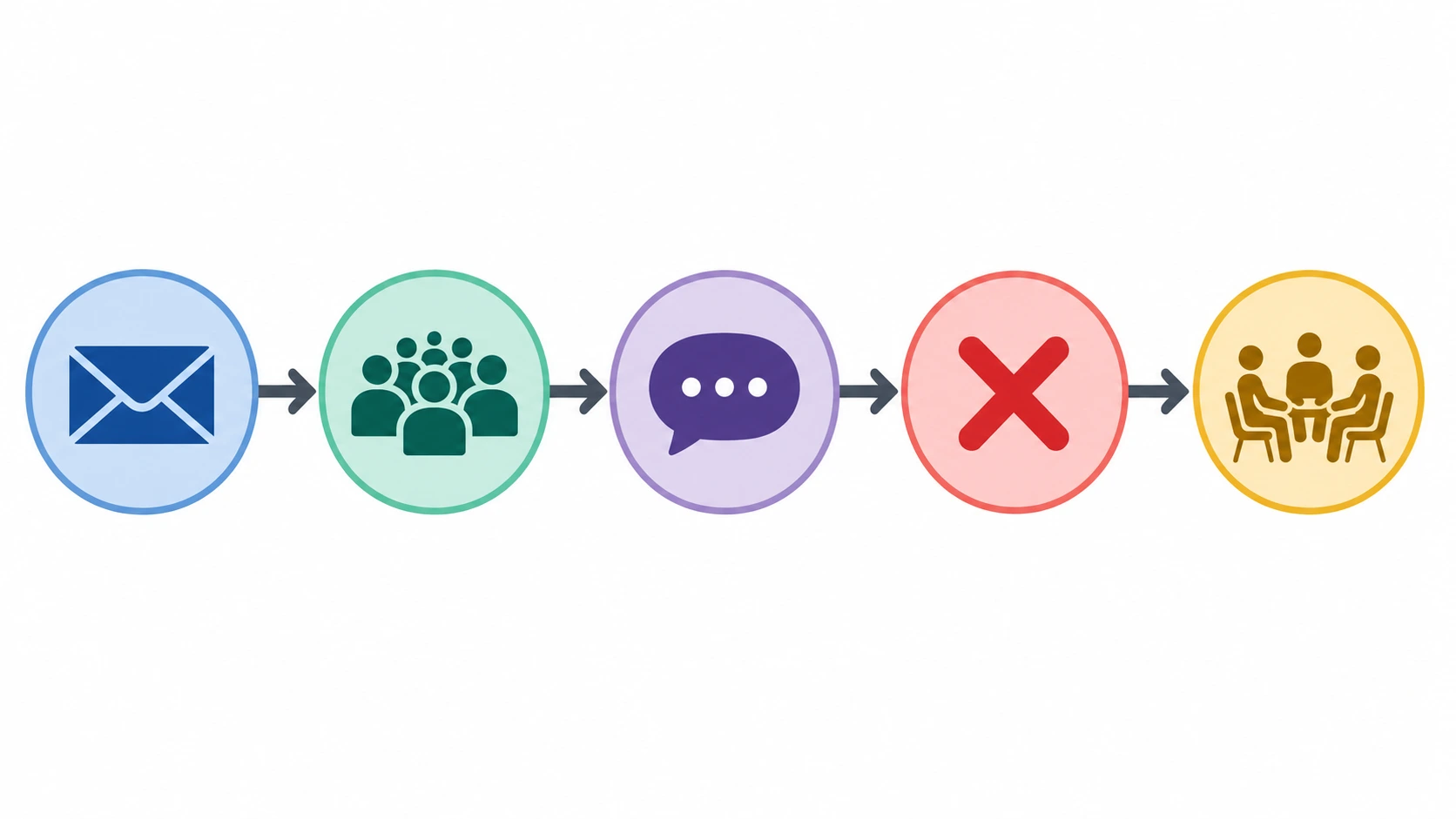
How does the jury selection process work? Follow it end to end — summons, panel, voir dire, challenges, and seating — with a Florida-specific guide.
See how PeerProbe handles ethical juror research
PeerProbe conducts only ethics-compliant, passive juror research — and documents everything for your file.
Request a Demo