
Jury Research Services: What They Are & When You Need Them
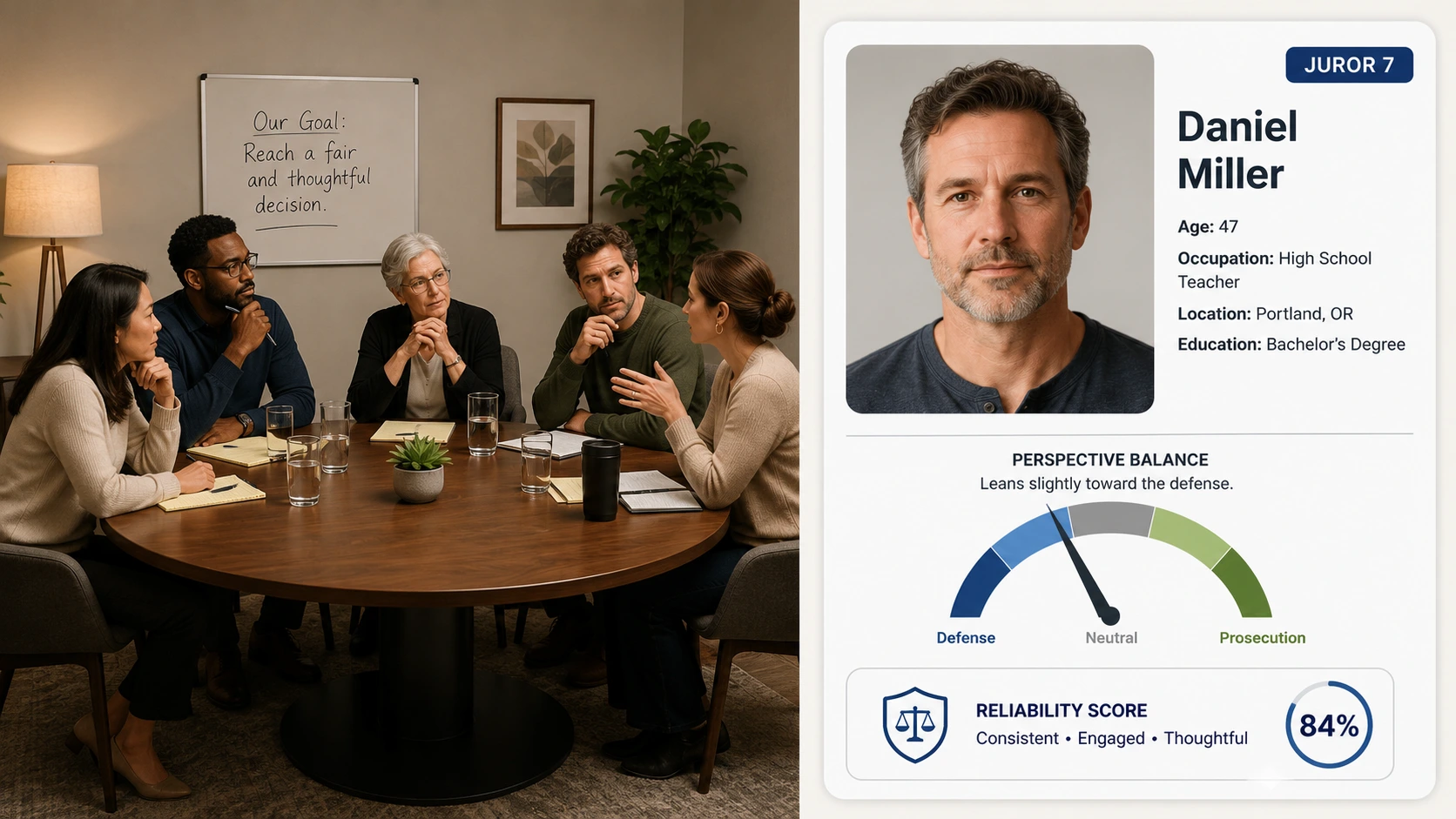
Jury research services range from mock juries to scored individual juror profiles.
Jury research services are the methods trial teams use to study how jurors will react to a case before and during trial — including mock trials, focus groups, online juror research, and venue analysis. They turn assumptions about a jury into tested predictions, helping attorneys refine themes, prepare witnesses, and make better strike decisions.
Every trial lawyer makes predictions about jurors. Jury research services exist to make those predictions less of a guess. Instead of betting on instinct about what a panel will believe, you test it — on surrogate jurors, against demographic and attitudinal data, and against what's publicly knowable about the actual people in your venire.
The category runs from a labor-intensive mock trial to a juror profile a tool builds in minutes, and from pre-trial planning to a read you use during voir dire itself. This guide walks through the main jury research services, what each one is for, when your case actually needs it, and how software now automates the online-research piece on every case.
Key takeaways
- The four core jury research services: mock trials, focus groups, online juror research, and venue analysis.
- Mock trials and focus groups test your case before trial; online research and scoring inform decisions during voir dire.
- Full pre-trial jury research runs into the tens of thousands per case, so it's reserved for high-stakes matters.
- Online juror research is the one piece software automates well — fast, standardized, on every case.
- Match the service to the question: testing your case needs mock juries; reading the actual panel needs juror research.
What are jury research services?
Jury research services are structured methods for studying juror behavior so a trial team can plan around it instead of reacting to it. They answer two different questions:
- "How will jurors react to my case?" — answered by mock trials and focus groups, run pre-trial.
- "Who is actually in my jury pool, and how do they lean?" — answered by online juror research and scoring, used during voir dire.
Most are delivered by jury consultants or trial consulting firms, though the online-research piece is increasingly handled by software. Below are the four you'll encounter most.
The four core jury research services
1. Mock trials
A mock trial recruits surrogate jurors who resemble your expected venire, presents condensed versions of both sides, and has them deliberate to a verdict. The team watches deliberations to learn which arguments persuade, which witnesses hold up, and what kind of juror leans which way.
Best for: high-stakes civil and complex criminal cases where you need to pressure-test the whole case narrative before trial.
2. Focus groups
Focus groups are looser than mock trials — moderated group discussions that probe reactions to specific themes, exhibits, opening statements, or witnesses. They surface attitudes and language jurors use, often early in case development.
Best for: developing trial themes, testing a demonstrative, or gauging community attitude before you've finalized strategy.
3. Online juror research
Once you have the actual venire, online juror research compiles publicly available information on each prospective juror — social media activity, voter registration and political affiliation, court case history, and neighborhood demographics — into a profile that flags likely bias. This is what informs real-time strike decisions.
Online juror research is the service most directly tied to the moment of decision: it tells you about the people you'll actually strike, not surrogates who resemble them.
This is also the piece where automation has changed the economics, which we'll come back to.
4. Venue and community analysis
Venue analysis evaluates the demographics and attitudes of the jurisdiction you're trying the case in — useful for assessing case risk and for change-of-venue motions. In Florida, juror pools are drawn under Florida Statutes Chapter 40, and public-records availability varies by county Clerk of Court, so venue specifics genuinely matter in this state.
Pre-trial vs. real-time: which service answers which question
The clearest way to choose is by when the research has to pay off.
| Service | When it's used | Question it answers | Typical delivery |
|---|---|---|---|
| Mock trial | Pre-trial | How will jurors react to my case? | Consultant / firm |
| Focus group | Early / pre-trial | Which themes and witnesses land? | Consultant / firm |
| Online juror research | Voir dire | Who's in my pool and how do they lean? | Software or manual |
| Venue analysis | Pre-trial / motions | Is this jurisdiction favorable? | Consultant / firm + data |
A mock trial won't tell you anything about the specific people seated in the box on trial day. Online juror research won't tell you whether your closing argument persuades. They're complementary, not interchangeable.
When does your case need jury research services?
You need full pre-trial jury research when the stakes justify the cost and the verdict hinges on juror attitudes.
- High-damages civil litigation — where mock-trial feedback on themes can move the outcome.
- Emotionally charged or high-publicity cases — where community attitude and venue matter.
- Cases with a clear attitudinal split — medical malpractice, product liability, employment.
You need online juror research on every case where you'll be picking a jury — because reading the actual panel is the one task that applies whether the matter is bet-the-company or routine. The barrier has always been cost and time: full jury research runs into the tens of thousands, and even manual online research eats hours of paralegal time per trial. That's the gap automation closes. For the broader cost picture and the trade-offs, see How much does a jury consultant cost? and Jury consultant alternatives.
How software automates the online-research piece
Mock trials and focus groups still require people. Online juror research doesn't.
The manual version — a paralegal running searches across social media, voter rolls, and court records under deadline — is slow, inconsistent across team members, and easy to do unevenly when the juror list arrives late. Software does the same compilation in minutes, applies the same depth to every juror, and produces a standardized read on bias. That makes professional-grade online research feasible on cases that would never justify a $15,000 jury-research engagement.
It's worth being precise about what this does and doesn't replace: software substitutes for the online juror-research service, not for mock trials, focus groups, or the strategic judgment behind venue analysis.
Online jury research and juror profiling
Online jury research is the piece of jury research done from public records rather than with surrogate jurors. For each person on the venire, a researcher looks at what is publicly available (social media, voter registration, court history, neighborhood demographics) and builds a short profile of the attitudes that person is likely to bring into the jury box. That profile is what most attorneys mean by jury profiling or juror profiling.
Done well, a juror profile answers three questions for every name on the list:
- Is there a red flag? A lawsuit, a public post about the parties, or a connection that should be raised in voir dire or as a challenge for cause.
- Which way does this juror lean? Attitudes toward corporations, injured plaintiffs, police, or employers that predict how they will read your evidence.
- What should I ask them? The follow-up questions that turn a hunch into a record you can strike on.
The research must stay passive: public information only, no friend requests, and no platform features that notify the juror. Our guide on whether it is legal to research jurors online covers the ethics rules in detail.
| Online research step | Done manually | Done in PeerProbe |
|---|---|---|
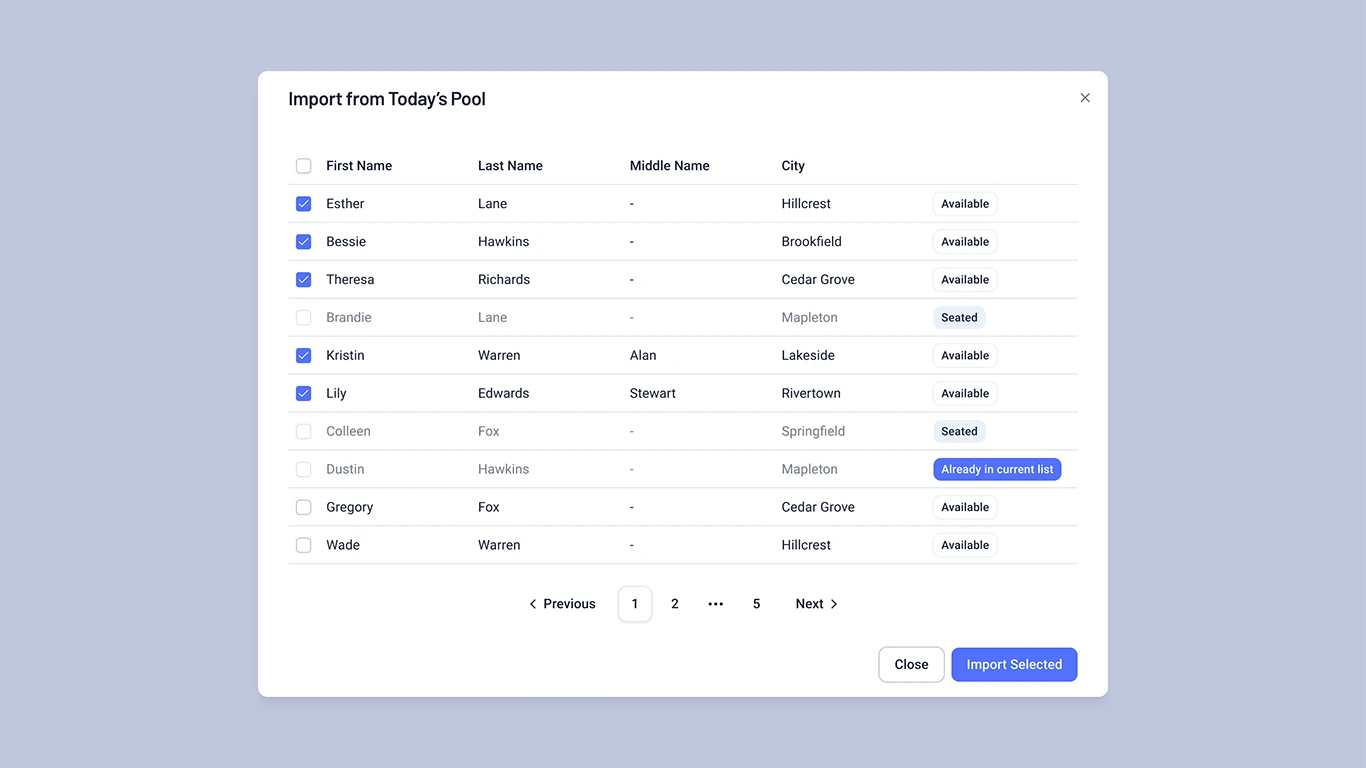
| Load the juror list | Retyping names from the clerk's list | Import the day's pool and pick the jurors on your panel |
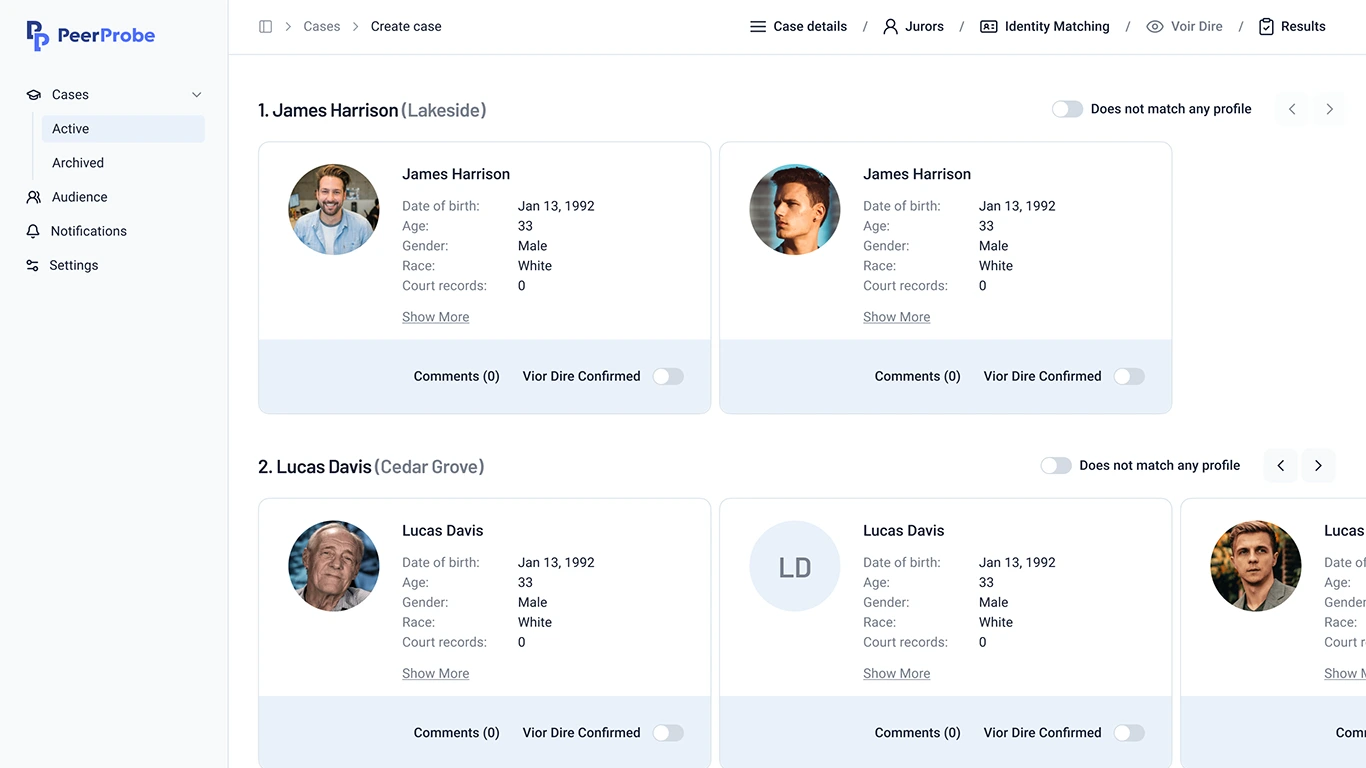
| Find the right person | Guessing between people with the same name | Identity matching shows candidate profiles side by side to confirm |
| Collect public records | Separate searches across social media, voter rolls, and court records | Compiled automatically for every juror |
| Read for bias | Each team member's own judgment | A 1 to 10 Juror Bias Score calibrated to your case type |
| Update during voir dire | Handwritten notes | Answers captured live and scores update in real time |
| Document the work | Screenshots in a shared folder | Every finding saved with its source for the file |
Where PeerProbe fits
PeerProbe automates the online juror-research service specifically. It compiles social media insights, voter registration and political affiliation, court case history, and neighborhood demographics into a single Juror Bias Score™ — a 1–10 rating for every juror in your pool, calibrated to your case type and delivered in real time during voir dire. It uses only publicly available information and is built around Florida's county-by-county public-records rules. For firms that can't run a mock trial on every case, it puts the research piece within reach on all of them. See also Jury Selection Software.
Here is what that looks like on a case. First, import the jurors from the day's pool:
Next, confirm each juror's identity. PeerProbe shows possible matching profiles side by side so the research is about the right person:
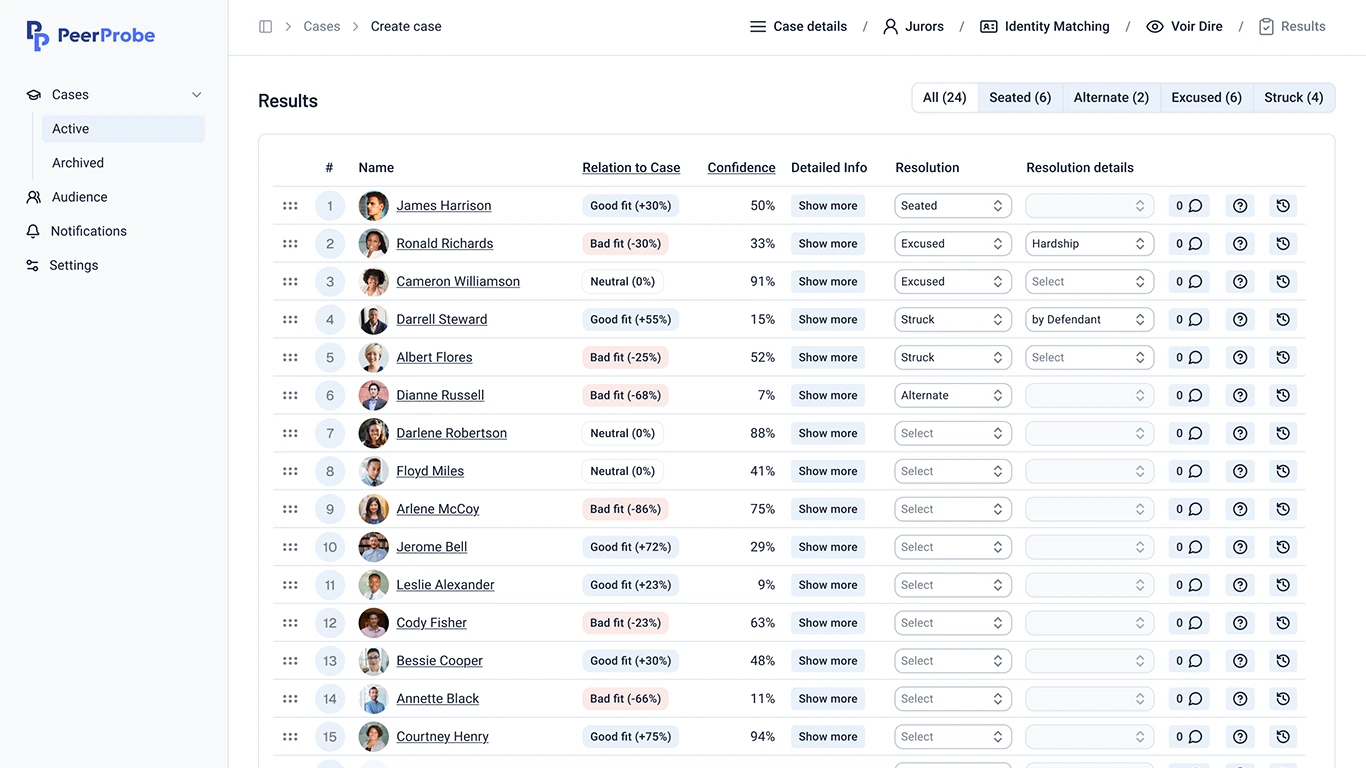
Then work from the results: every juror scored for fit and confidence, ready for voir dire and strikes. Read more about the Juror Bias Score and public social media review.
Frequently asked questions
What are jury research services?
Jury research services are structured methods for studying how jurors will react to a case, including mock trials, focus groups, online juror research, and venue analysis. They help trial teams refine themes, prepare witnesses, assess venue, and make informed strike decisions during voir dire.
What's the difference between a mock trial and a focus group?
A mock trial recruits surrogate jurors, presents both sides, and has them deliberate to a verdict, testing the full case. A focus group is a looser moderated discussion that probes reactions to specific themes, exhibits, or witnesses, often earlier in case development. Mock trials test outcomes; focus groups test ideas.
How much do jury research services cost?
Full pre-trial jury research, including a mock trial, commonly runs $10,000–$30,000 or more per case, which is why it's reserved for high-stakes matters. Online juror research delivered through software is far cheaper, available for a flat monthly subscription that covers every case.
Can you do jury research yourself?
Yes, for the online-research piece. Attorneys and paralegals can research prospective jurors using publicly available information, and software automates that work so it's faster and standardized. Mock trials and focus groups, however, require recruiting surrogate jurors and trained facilitation, which is hard to replicate in-house.
Is online juror research legal?
Yes, when it relies only on publicly available information and involves no contact with jurors. Multiple bar opinions have found passive online juror research ethically permissible, and some suggest that failing to research jurors may fall short of the duty of competence. The method matters, so use tools built around your state's rules.
Conclusion
Jury research services range from a full mock trial to a single automated juror profile, and they answer different questions: how your case will land versus who's actually in your panel. The expensive pre-trial services stay reserved for high-stakes matters. But the online-research piece, reading the real jurors you'll strike, now applies to every case, because software has made it fast and affordable. Start from the question you need answered, and the right service picks itself.
See how PeerProbe scores every juror in your pool →
Sources: Florida Rule of Civil Procedure 1.431 (jury / voir dire); Florida Statutes Chapter 40 (jurors); Florida Clerks of Court (flclerks.com); American Society of Trial Consultants (astcweb.org); industry published materials. Verify all URLs and current rule text before publication.
Frequently Asked Questions
Related articles
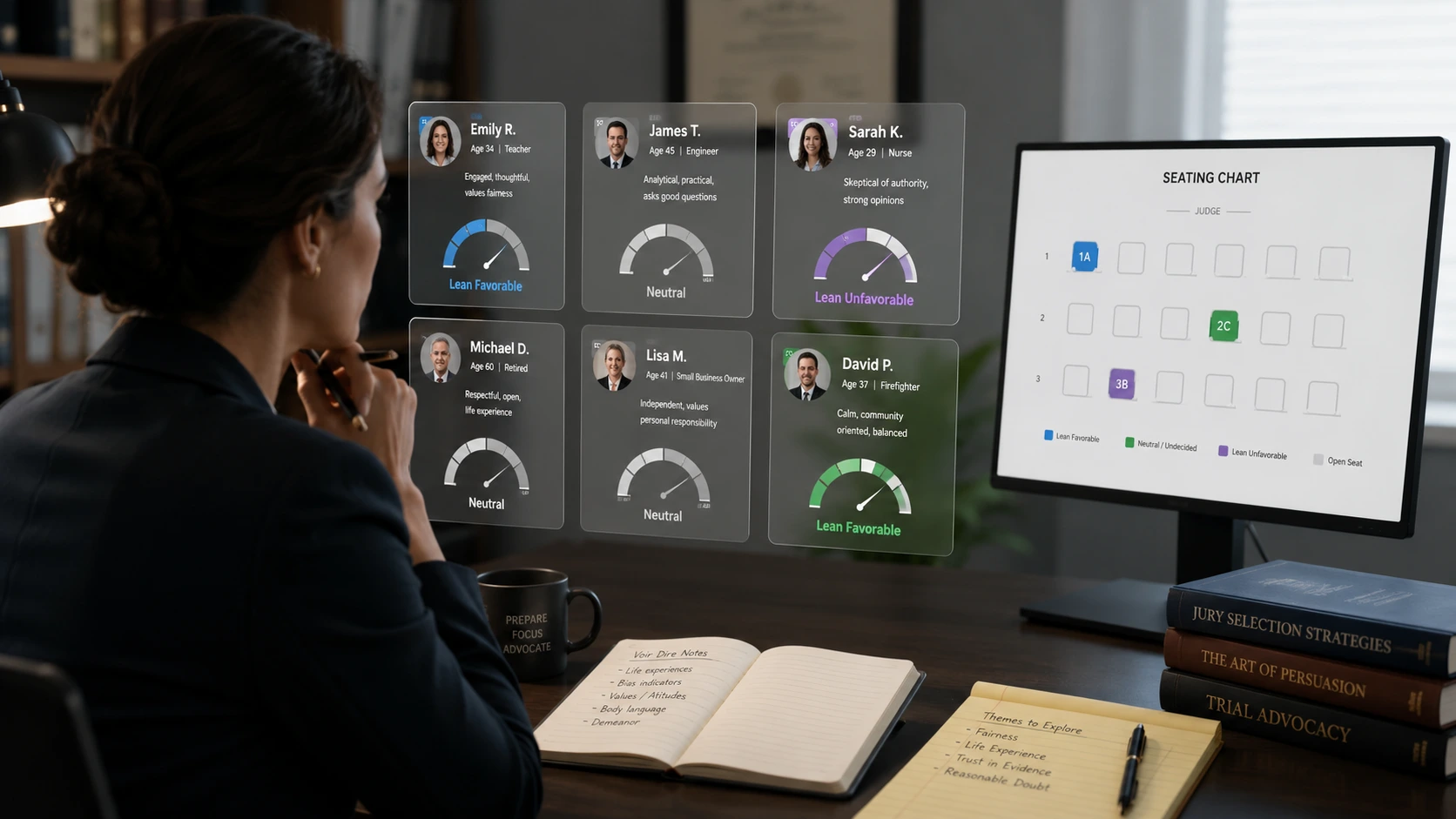
What Is a Jury Consultant? Role, Value & Cost
A jury consultant uses behavioral science to help trial teams pick favorable jurors. Learn what they do, the science, when they're worth it, and the cost.
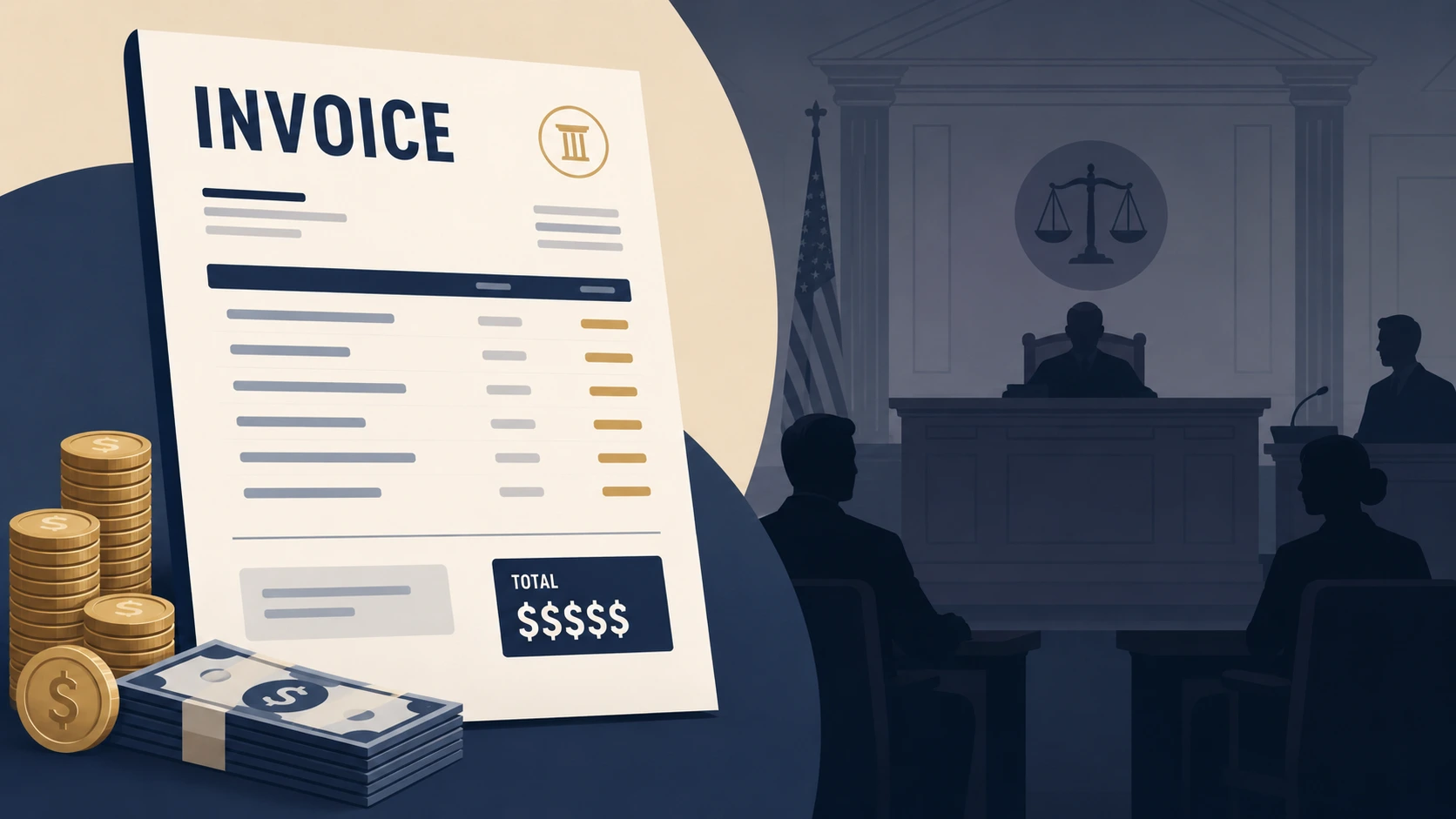
How Much Does a Jury Consultant Cost?
A jury consultant costs $5,000–$25,000 per trial, sometimes $100k+. See the full cost breakdown, what drives it, and the per-trial vs subscription math.
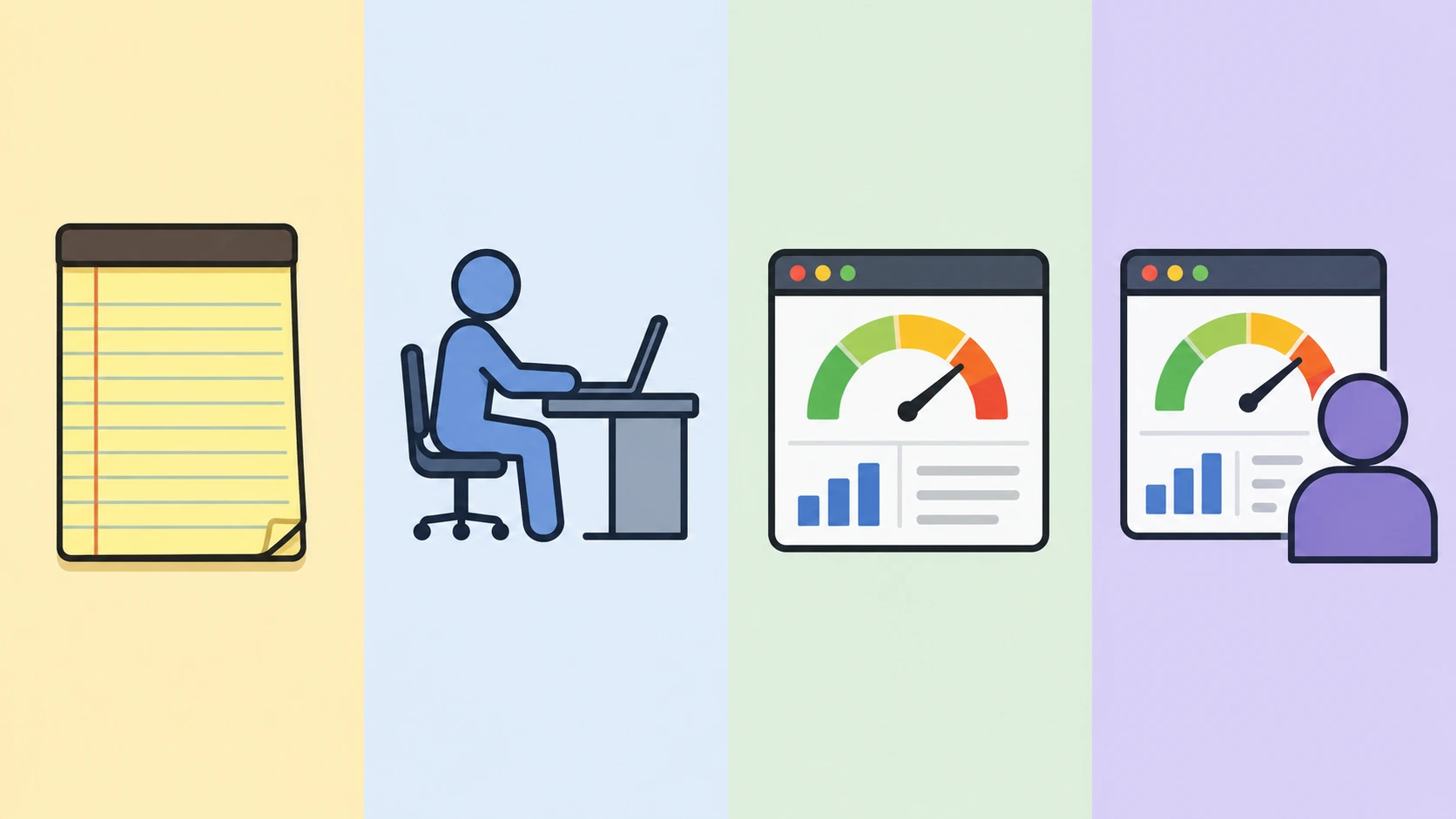
Jury Consultant Alternatives for Modern Trial Teams
Jury consultant alternatives include DIY research, paralegal research, jury selection software, and hybrid models. Compare the pros, cons, and cost of each.
See how PeerProbe handles ethical juror research
PeerProbe conducts only ethics-compliant, passive juror research — and documents everything for your file.
Request a Demo