
The Jury Selection Process, Explained
Pulling today's jury pool into a case in PeerProbe.
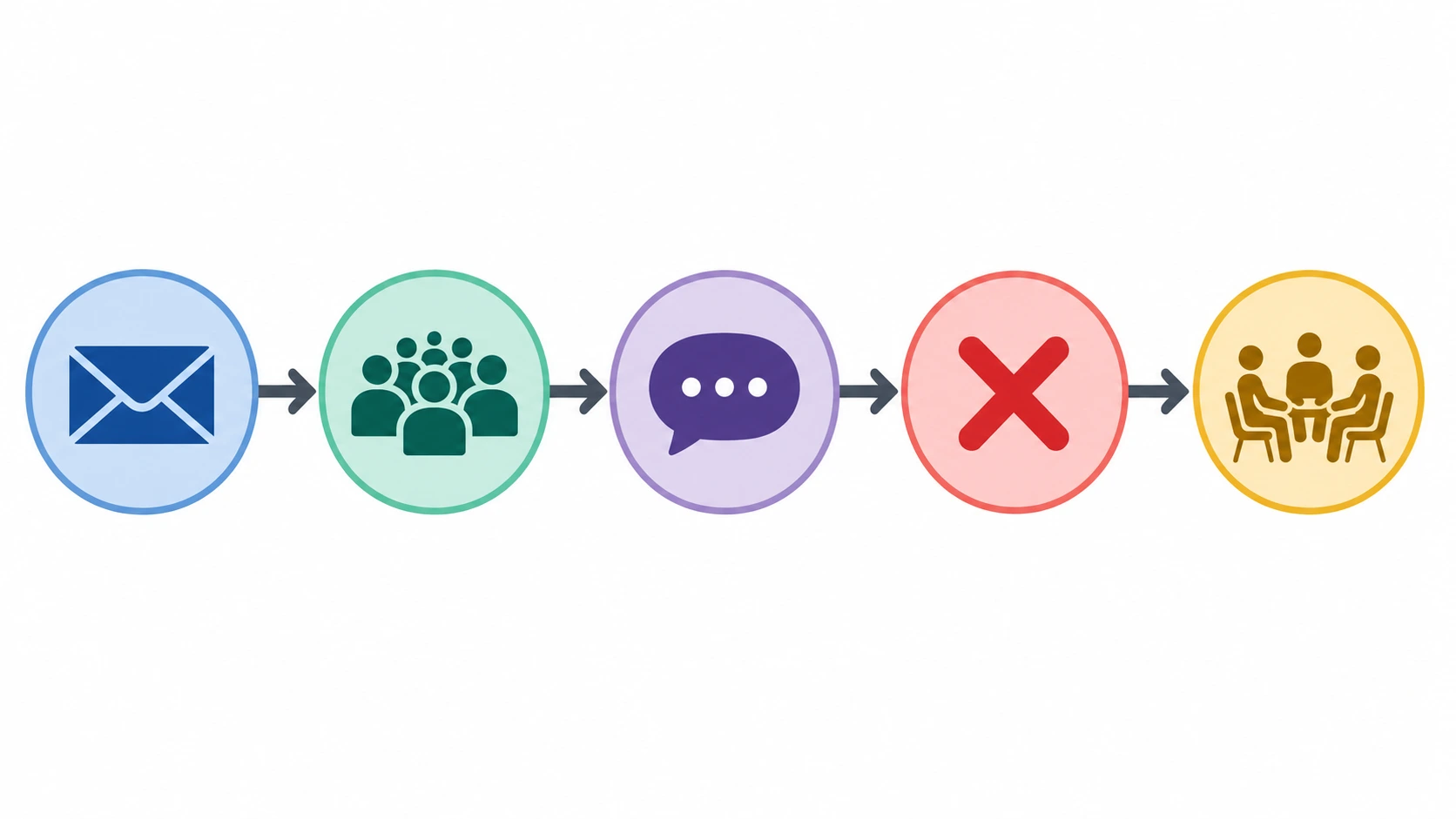
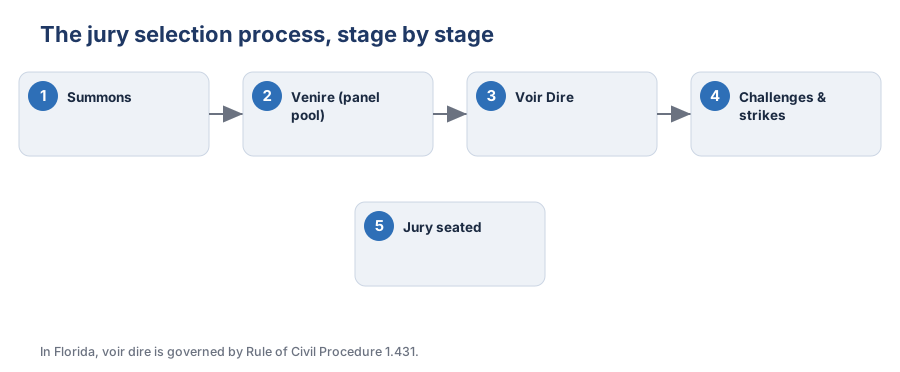
The jury selection process is how a random group of summoned citizens is narrowed down to the panel that will decide a case. It runs in five stages: a jury summons goes out, a venire (pool) reports to the courthouse, the judge and attorneys question the panel in voir dire, lawyers remove jurors through for-cause and peremptory challenges, and the remaining jurors plus alternates are sworn in.
From the gallery, jury selection looks like paperwork and waiting. In fact it is the one stage of a trial where the lawyers, not the judge or the witnesses, do the deciding, and the calls they make in a few hours can move a verdict further than any single exhibit.
The goal of the process is constitutional: an impartial jury. The reality is adversarial. Each side wants to seat the jurors most likely to favor its theory and remove the ones most likely to work against it, all from a room of strangers they have never met and have only minutes to read.
This guide walks the jury selection process from the summons in the mailbox to the twelve people in the box, with the Florida specifics that matter if your case is being tried here.
Key takeaways
- Jury selection runs in five stages: summons → venire (pool) → voir dire → challenges → seating.
- Voir dire is the questioning phase; challenges are how attorneys remove jurors.
- There are two kinds of challenges: for-cause (unlimited, requires a reason) and peremptory (limited, no reason needed — but limited by Batson).
- In Florida, juror qualification is set by Florida Statutes Chapter 40 and selection procedure by Rule 1.431.
- Most civil and criminal selection takes a few hours to a day; complex or high-profile trials can run far longer.
How are jurors chosen? The five stages
Jurors are chosen by progressively narrowing a random pool. The system starts wide, with a list of eligible citizens, and tightens at each stage until only the seated jury and its alternates remain.
Stage 1 — The summons and the source list
The process begins long before anyone reaches a courtroom. The clerk of court draws names at random from source lists — in Florida, primarily licensed drivers and ID-card holders — and mails a jury summons ordering each person to report for jury duty on a given date.
Not everyone who is summoned will serve. Some are disqualified, some are excused, and many never make it past the next stage. To serve on a jury in Florida, a person must be a U.S. citizen, 18 or older, a legal resident of the county, and not have a disqualifying felony conviction without restored rights. People can be excused or postponed for cause — age 70+, certain caregiving duties, or undue hardship.
Stage 2 — The venire reports to the courthouse
The group that actually shows up is the venire, or jury pool. They check in at the jury assembly room, complete a juror questionnaire, and wait to be called into a courtroom for a specific case. A judge may handle preliminary qualification here — confirming eligibility and excusing jurors who clearly cannot serve — before any case-specific questioning starts.
In Florida: how the pool is summoned and qualified is governed by Florida Statutes Chapter 40, administered through each county's Clerk of Court. With 67 counties, the public-records and summons mechanics vary from venue to venue.
Stage 3 — Voir dire (the questioning)
Once a panel is seated in the courtroom, the voir dire examination begins. The judge and the attorneys question prospective jurors — about their backgrounds, experiences, attitudes, and any connection to the parties or the issues — to determine each juror's suitability to serve. This is the heart of jury selection and where attorneys gather the information they will use to make their challenges.
We cover this stage in depth in the voir dire process and give a working question bank in voir dire questions: a trial attorney's guide.
Stage 4 — Challenges remove jurors
Based on what voir dire reveals, each side asks the court to remove specific jurors. There are two mechanisms, covered in the next section. This is the adversarial core: the lawyers are not selecting jurors so much as de-selecting the ones they don't want.
Stage 5 — The jury is sworn
Once enough jurors survive the challenges, the court seats the jury — typically 6 in a Florida civil case and 12 in a capital case — plus one or more alternate jurors who hear the trial in case a seated juror cannot finish. The jury is sworn, and the trial begins.
What's the difference between voir dire and jury selection?
*Voir dire is one stage inside jury selection — the questioning stage — not a synonym for the whole process.* People use the terms interchangeably, but precisely: jury selection is the entire funnel from summons to sworn jury; voir dire is the in-courtroom examination of prospective jurors that produces the information attorneys use to strike.
| Term | What it covers |
|---|---|
| Jury selection | The full process: summons → venire → voir dire → challenges → seated jury |
| Voir dire | The questioning phase only — judge and attorneys examine the panel |
| Challenges | The removal phase — for-cause and peremptory strikes |
| Venire / panel / pool | The group of summoned citizens before any are removed |
How do attorneys actually remove jurors?
Attorneys remove jurors through two kinds of challenges, and the distinction between them is the most important mechanic in the whole process.
Challenges for cause are unlimited, but each requires a stated reason the judge accepts — usually that the juror cannot be impartial. A juror related to a party, who has already formed an opinion, or who admits a disqualifying bias can be struck for cause. The judge decides whether the reason is good enough.
Peremptory challenges let an attorney remove a juror without stating a reason. Each side gets only a fixed number, and they cannot be used to exclude jurors based on race or sex under Batson v. Kentucky and its progeny. The number depends on the case type and jurisdiction.
A for-cause challenge needs a reason and is unlimited. A peremptory challenge needs no reason but is strictly limited. That trade-off is what makes every strike a strategic decision.
Because peremptories are scarce, attorneys have to decide which jurors are worth spending one on — and that is where reading the panel accurately matters most. We break the mechanics down fully in for-cause vs. peremptory strikes.
How long does jury selection take?
Most jury selection takes a few hours to a full day. Routine civil and criminal cases often seat a jury in a morning or afternoon. The length depends on the case, not a fixed rule.
What drives the time:
- Case complexity and stakes. A straightforward misdemeanor or small civil claim moves fast; a multi-week products-liability or capital case can take days.
- Pretrial publicity. When a case has been in the news, voir dire stretches as the court screens for jurors who have already formed opinions.
- Number of peremptories and panel size. More strikes and a larger venire mean more rounds of questioning.
- Whether a written questionnaire is used. A detailed questionnaire completed in advance can shorten in-court questioning considerably.
High-profile trials are the outliers people remember — jury selection in some has run for weeks — but those are not the norm.
What lawyers are looking for during selection
The mechanics are only half the story. Underneath the procedure, each attorney is running a continuous bias assessment: which of these strangers is most likely to resist my theory of the case, and how do I get them off this jury?
That assessment used to run almost entirely on instinct, a juror questionnaire, and a few minutes of questioning. The problem is that the jurors most likely to be biased are also the ones least likely to disclose it. A juror can sincerely believe they can be fair while holding attitudes — about corporations, police, doctors, or personal responsibility — that will quietly drive how they read every piece of evidence.
This is the gap that juror research and scoring tools close. PeerProbe compiles publicly available information — social media activity, voter registration, court history, and neighborhood demographics — into a single Juror Bias Score™ for every prospective juror, calibrated to the case type and delivered in real time during voir dire. It surfaces the bias signal that a few minutes of questioning won't, so attorneys can spend their limited peremptories where they matter. For a deeper look at the read itself, see what lawyers look for in jury selection.
Frequently asked questions
What is the jury selection process?
The jury selection process is the procedure for narrowing a random pool of summoned citizens down to the jury that decides a case. It runs in five stages: a summons is issued, the venire reports to the courthouse, attorneys and the judge question the panel in voir dire, jurors are removed through for-cause and peremptory challenges, and the remaining jurors are sworn in.
How are jurors selected for a trial?
Jurors are selected by random draw and then filtered. The clerk of court randomly summons eligible citizens from source lists like driver and ID records. Those who report form the venire, are questioned during voir dire, and are removed through challenges until enough impartial jurors remain to be seated and sworn.
How long does jury selection take?
Most jury selection takes a few hours to one day. Routine civil and criminal cases often seat a jury in a single session. Complex, high-stakes, or heavily publicized trials can take several days or, in rare cases, weeks, because the court must screen more carefully for bias and prior knowledge.
What is the difference between voir dire and jury selection?
Voir dire is one phase within jury selection — the questioning of prospective jurors by the judge and attorneys. Jury selection is the whole process, from the summons through the seating of the jury. Voir dire produces the information attorneys then use to exercise their for-cause and peremptory challenges.
How many jurors are on a Florida jury?
In Florida, most civil cases are decided by 6 jurors, and capital criminal cases require 12. Courts also seat one or more alternate jurors who hear the entire trial and step in if a seated juror cannot complete service. Jury size and procedure are set by Florida Rule of Civil Procedure 1.431 and the criminal rules.
Conclusion
From the gallery the jury selection process looks procedural, but it is the most consequential strategic stage of a trial. A random pool becomes a sworn jury through five steps: summons, venire, voir dire, challenges, seating. The decisions attorneys make in the questioning and challenge phases can decide the case before opening statements, which is why the best trial lawyers treat selection as a disciplined bias assessment rather than a hunch.
See how PeerProbe scores every juror in your pool →
Sources: Florida Statutes Chapter 40 (jurors); Florida Rule of Civil Procedure 1.431 (jury / voir dire); Rules Regulating The Florida Bar; Florida Clerks of Court (flclerks.com); Florida Courts (flcourts.gov); Batson v. Kentucky, 476 U.S. 79 (1986).
Frequently Asked Questions
Related articles
What Lawyers Look For in Jury Selection
What do lawyers look for in jury selection? The six things attorneys actually evaluate in a juror — bias, experience, attitudes, demographics, and influence.
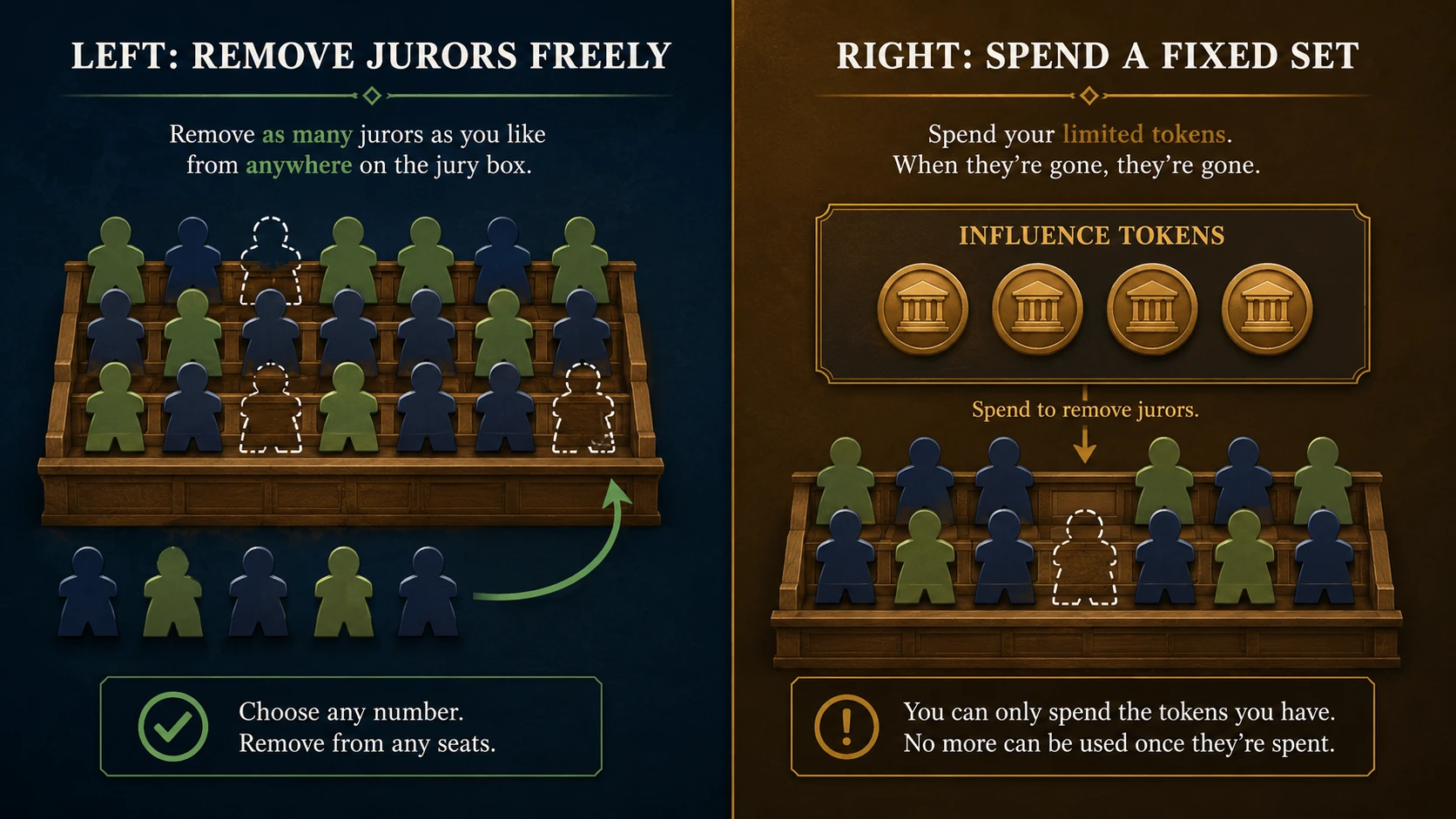
Why Jurors Get Dismissed: For-Cause vs. Peremptory Strikes
Why do jurors get dismissed? A clear guide to for-cause vs. peremptory strikes, Batson limits, how many challenges each side gets, and strike strategy.

Jury Selection by Case Type: PI, Med-Mal & Criminal Defense
How jury selection changes by case type — personal injury, medical malpractice, product liability, criminal defense, and employment — with a bias table.
See how PeerProbe handles ethical juror research
PeerProbe conducts only ethics-compliant, passive juror research — and documents everything for your file.
Request a Demo