How to Identify Juror Bias: A Trial Attorney's Guide to Voir Dire and Beyond

The biases that decide verdicts are rarely the ones jurors admit to — or even know they have.
Every jury trial begins with a selection process that is, at its core, a bias assessment. The attorney's job during voir dire is not simply to fill twelve seats — it is to identify which of those seats carries the greatest risk to their client and eliminate that risk as effectively as the rules allow.
That job has always been hard. It has gotten harder as our understanding of how bias actually works has deepened. What neuroscience, cognitive psychology, and decades of empirical research have made clear is that juror bias is not primarily a matter of overt prejudice. It is, more often, a matter of deeply embedded mental frameworks that shape how jurors perceive evidence, interpret a defendant's behavior, and ultimately judge guilt, fault, or liability — often without any conscious awareness that bias is operating at all.
Instinct remains part of every trial attorney's toolkit. But instinct alone is an insufficient predictor of juror behavior. This guide covers what bias actually is in the jury context, which cognitive patterns matter most, and how to build a framework that reliably identifies the jurors most likely to work against your client before they ever take their seat.
What Juror Bias Actually Is — and Why It's So Hard to Detect
Bias, in the context of jury proceedings, is far broader than most attorneys initially consider. It is not limited to racial prejudice, strong political views, or obvious hostility toward one side. Those forms of bias exist and matter. But they represent only a narrow slice of the full spectrum of attitudes and cognitive patterns that can affect a juror's judgment.
In its broadest description, juror bias refers to any pre-existing attitude, belief, experience, or cognitive tendency that causes a juror to evaluate evidence presented at trial through a distorted lens — one that leads them toward conclusions that are not purely a product of the facts. A juror may hold a deep distrust of corporations without ever having articulated that distrust publicly. A juror may perceive defendants in criminal cases as inherently more culpable than the prosecution's evidence actually supports. A juror may have societal attitudes about law enforcement that make them resistant to any inference of bad behavior by police.
These are all forms of bias. And they are all, to varying degrees, concealable — from the court, from counsel, and sometimes from the jurors themselves.
Previous studies consistently show that jurors tend to underreport attitudes that they perceive as socially unacceptable or that they believe might disqualify them from jury service. This is not always deliberate dishonesty. People are genuinely poor at identifying their own personal biases. What we believe about ourselves — that we are fair, open-minded, capable of following a judge's instruction — does not reliably correlate with how we actually process information when emotion, identity, and prior experience are engaged.
That is the central challenge for any attorney trying to identify bias during voir dire: the jurors most likely to be biased are also the ones least likely to disclose it.
The Cognitive Biases Most Likely to Affect Jury Decision Making
Understanding which specific cognitive biases are most active in a jury trial context allows attorneys to identify them more reliably — in questioning, in research, and in behavioral observation. Here are the patterns that matter most.
Confirmation bias is one of the most powerful and pervasive forces in jury decision making. Once a juror forms an early hypothesis about whether the defendant is guilty or the plaintiff is at fault, they will tend to interpret all subsequent evidence in a way that supports that hypothesis. They will discount or minimize evidence that challenges their initial inference and elevate evidence that confirms it. Confirmation bias is particularly dangerous in trials where the prosecution or plaintiff presents their case first, because it means the jury's framework may be largely set before the defense has said a word.
In-group bias reflects the deeply human tendency to judge people more favorably when they share our identity — racial, cultural, socioeconomic, professional — and more harshly when they don't. Research consistently shows that in-group bias affects how jurors perceive a defendant, how much benefit of the doubt they extend to witnesses, and how they respond to competing narratives. In criminal trials, racial bias in jury decision making is among the most extensively documented forms of in-group bias in the legal system. But in-group dynamics operate across a broad range of identity markers, not just race.
Attribution bias governs how jurors assign fault and evaluate behavior. When a juror views a defendant's actions through a lens of dispositional attribution — concluding that behavior reflects character rather than circumstances — they are more likely to convict or find liability. This bias is particularly relevant in criminal defense proceedings, where the prosecution routinely frames the defendant's conduct as evidence of who they are, not just what they did.
Punishment bias reflects pre-existing attitudes about the appropriate response to bad behavior, guilt, and conviction. Some jurors enter the courtroom believing that the justice system is too lenient and that defendants who face trial are probably guilty. Others hold the opposite view — that the legal system is weighted against defendants and that proof of innocence should be presumed aggressively. Both represent forms of punishment bias that will shape how a juror responds to evidence and instruction.
Anchoring bias affects how jurors evaluate damages, sentencing, and the weight of individual pieces of evidence. The first number or description a juror hears tends to anchor their subsequent judgment, even when they are explicitly told to evaluate each piece of evidence independently. In civil proceedings, this has direct implications for how plaintiff and defense counsel frame damages arguments.
Neuroscience research has given us increasingly detailed insight into how these cognitive biases operate at the neurological level — how the brain processes information about in-group and out-group members differently, how emotional responses to a defendant or victim correlate with verdict outcomes, and how the brain's tendency to pattern-match can violate the standard of dispassionate evidence evaluation that the legal system assumes.
Using Voir Dire to Identify and Assess Juror Bias
Voir dire remains the primary arena in which attorneys can directly assess juror bias — but its effectiveness has real limits, and understanding those limits is as important as mastering the questioning techniques themselves.
The traditional voir dire examination relies on a juror's willingness to self-disclose attitudes that they may not fully understand themselves. Research consistently shows this is an insufficient mechanism for surfacing the cognitive and attitudinal biases that most reliably predict verdict behavior. Jurors may genuinely believe they can be impartial while holding deeply embedded attitudes that will drive their judgment. Self-reported impartiality is, in the research literature, one of the weakest predictors of actual juror neutrality.
That said, voir dire questioning done well can surface a meaningful amount of bias signal. The key is to move beyond yes/no questions about impartiality — "Can you be fair to both sides?" will almost always produce the answer the juror thinks you want — toward open-ended questions that reveal attitude, framework, and reaction. Effective techniques include:
Hypothetical questioning. Presenting a hypothetical scenario that parallels the core facts of your case allows you to assess how a juror's framework operates without triggering the social norm of declaring impartiality. A juror who might not admit bias against corporate defendants will often reveal that bias when asked how they would feel about a hypothetical company's conduct in a situation that mirrors your case.
Prior experience probing. A juror's history with the legal system — as a plaintiff, defendant, witness, or victim — is one of the most reliable correlates of bias. Jurors who have had negative experiences with law enforcement, the courts, or institutions similar to your client will carry those experiences into the courtroom regardless of what a judge's instruction says.
Attitude and belief elicitation. Asking jurors to describe their views on broad social issues — attitudes toward personal responsibility, views on the justice system, beliefs about how corporations should be held accountable — surfaces the societal attitudes that will inform their judgment without requiring them to directly admit prejudice.
Behavioral observation. A juror's reaction to specific topics, names, or descriptions during voir dire — body language, hesitation, visible discomfort — can reveal bias that verbal responses conceal. Experienced trial counsel develops pattern recognition for these signals. Scoring and documenting these observations in real time, rather than relying on memory, makes the assessment more reliable.
The critical discipline is to score each juror systematically during voir dire rather than forming impressions that are difficult to defend or recall accurately. A consistent scoring framework applied to every juror creates a defensible basis for peremptory challenges and for cause motions.
What Research and Social Media Reveal That Voir Dire Won't
For all its value, voir dire questioning cannot access what a juror has never been asked to examine about themselves. That gap is where pre-trial research becomes indispensable.
A juror's social media presence is often the most revealing window into the attitudes, affiliations, and societal views that will shape their judgment. What a person chooses to share publicly — the causes they support, the content they amplify, the groups they belong to, the opinions they express — is a far more reliable description of their actual belief system than anything they say under the social pressure of voir dire.
Previous studies of juror behavior confirm that online behavior correlates meaningfully with courtroom attitudes. A juror who has spent years sharing content critical of pharmaceutical companies is a bias risk in a drug liability trial, regardless of whether they believe they can be fair. A juror who participates in online communities that express hostility toward the legal system brings those attitudes into every proceeding they participate in. Identifying these patterns before jury selection gives counsel the intelligence to make more informed strikes.
The approach to social media research must remain compliant with applicable ethics rules — passive review of publicly available information only, with no contact or notification to the juror. Within those parameters, a thorough review of a juror's profile across platforms can surface a broad range of attitude indicators that voir dire simply cannot reach.
Neighborhood demographics, voter registration, and prior legal history add further layers. Jurors tend to hold attitudes that are shaped by the communities they live in, the civic choices they make, and their prior exposure to the legal system. Each of these data points, taken individually, is insufficient. Combined into a composite score alongside voir dire observations and implicit testing, they form a reliably predictive picture.
Implicit Bias Testing: The Science of What Jurors Won't Tell You
The most sophisticated tool in modern juror bias identification is implicit association testing — and its scientific foundations go deeper than most trial attorneys realize.
The theoretical framework for understanding implicit bias owes much to the work of psychologist Patricia Devine, whose research on automatic versus controlled processing of stereotypes established that even individuals who consciously reject prejudice can hold implicit associations that influence their judgment. Devine's model demonstrates that participants' conscious attitudes and their implicit associations frequently diverge, and that implicit associations are often stronger predictors of behavior than self-reported beliefs.
The Implicit Association Test, or IAT, measures the strength of automatic associations between concepts — for example, between a racial group and attributes like innocence or guilt — by assessing reaction time. The hypothesis is that associations deeply embedded in memory will produce faster responses than those that require conscious processing. This reaction time differential reveals bias that a direct question would never surface.
In the jury context, IAT results can assess a juror's automatic associations with defendants who share certain characteristics, with law enforcement, with corporations, or with the specific type of harm at issue in the case. These results correlate with verdict tendencies in ways that voir dire responses do not. Previous studies suggest that IAT results are among the most reliable available predictors of how a juror will evaluate evidence presented at trial.
Administered online prior to jury selection, IAT testing gives trial teams data points that no amount of voir dire examination can replicate. Combined with social media research, demographic analysis, and live voir dire scoring, IAT results allow attorneys to assess each juror's bias profile across multiple independent dimensions — and to build a composite score that reflects the full picture rather than any single data point.
Building a Framework to Identify, Score, and Act on Juror Bias
Identifying bias is only useful if it informs a clear strategy for jury selection. That requires a framework — a systematic approach to evaluating each juror that produces a defensible, actionable score rather than a collection of impressions.
Pre-trial research — social media review, demographic profiling, voter registration, prior legal history — establishes each juror's baseline bias profile before a single question is asked. This allows counsel to assess which jurors warrant the closest attention during voir dire and to identify patterns that should inform questioning strategy.
Implicit association testing, administered online prior to jury selection, surfaces automatic cognitive associations that self-report cannot reach. IAT results flag jurors whose implicit attitudes toward the defendant, the plaintiff, or the subject matter of the trial diverge significantly from what they are likely to say in response to voir dire questioning.
Live voir dire scoring captures reaction, body language, hesitation, and the content of a juror's responses in real time. Systematic scoring against a consistent rubric — applied to every juror on the panel — creates a comparative picture that makes strike decisions easier to justify and harder to second-guess.
Combined into a single composite score, these data streams allow attorneys to reliably identify the jurors who pose the greatest bias risk to their client — and to prioritize challenges accordingly.
The goal is not to eliminate bias from the jury entirely. That is not achievable. Jurors are human beings, and every human being carries cognitive biases that no instruction from a judge can fully override. The goal is to minimize the presence of bias that is most likely to work against your client, while identifying and, where possible, addressing biases that favor your theory of the case.
PeerProbe's Juror Bias Score™ integrates multi-stream data — social media intelligence, IAT results, demographic inputs, and live voir dire assessments — into a single, defensible 1–10 score for every juror in your pool, calibrated to your specific case type and theory of liability.
Conclusion
The science of juror bias has advanced enormously. What neuroscience, cognitive psychology, and empirical legal research have established, collectively, is that the biases most likely to determine your verdict are the ones least likely to surface in response to a direct question. They are embedded in automatic cognitive processes, shaped by years of lived experience, and largely invisible to the jurors who hold them.
The attorneys who identify juror bias most effectively are not the ones with the best instincts — though instinct still matters. They are the ones who assess bias systematically, across multiple dimensions, before they ever step into the courtroom. They combine pre-trial research, implicit testing, and structured voir dire scoring into a composite picture that is reliably more predictive than any single data point alone.
The tools to do this rigorously, compliantly, and at scale now exist. The question is whether you are using them.
See how PeerProbe's Juror Bias Score™ works — and what it means to have multi-stream bias intelligence on every juror in your pool before voir dire begins.
For further reading: Devine, P.G. (1989). Stereotypes and prejudice: Their automatic and controlled components. Journal of Personality and Social Psychology, 56(1), 5–18. See also ABA resources on implicit bias in the legal system.
Related articles
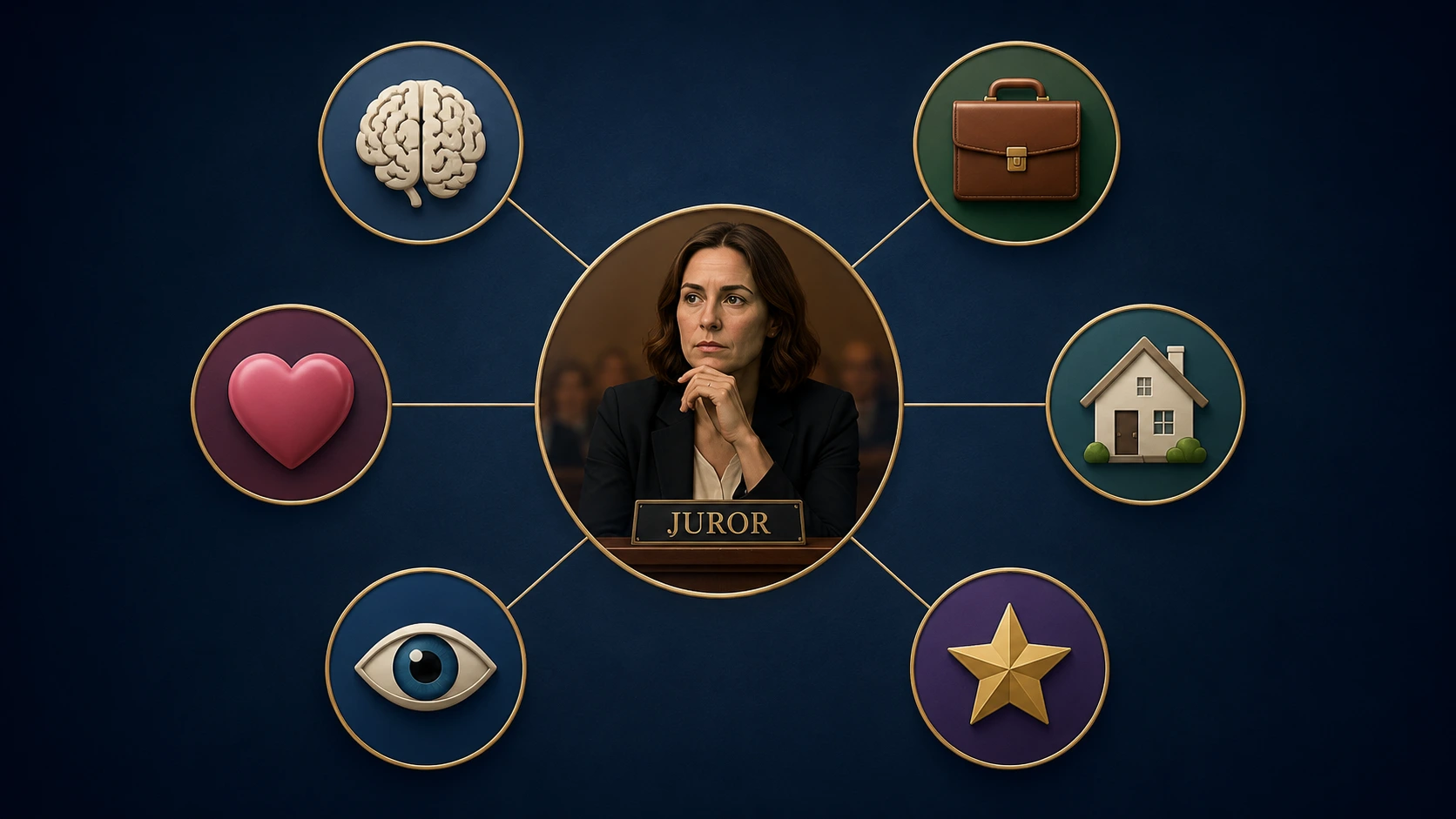
What Lawyers Look For in Jury Selection
What do lawyers look for in jury selection? The six things attorneys actually evaluate in a juror — bias, experience, attitudes, demographics, and influence.
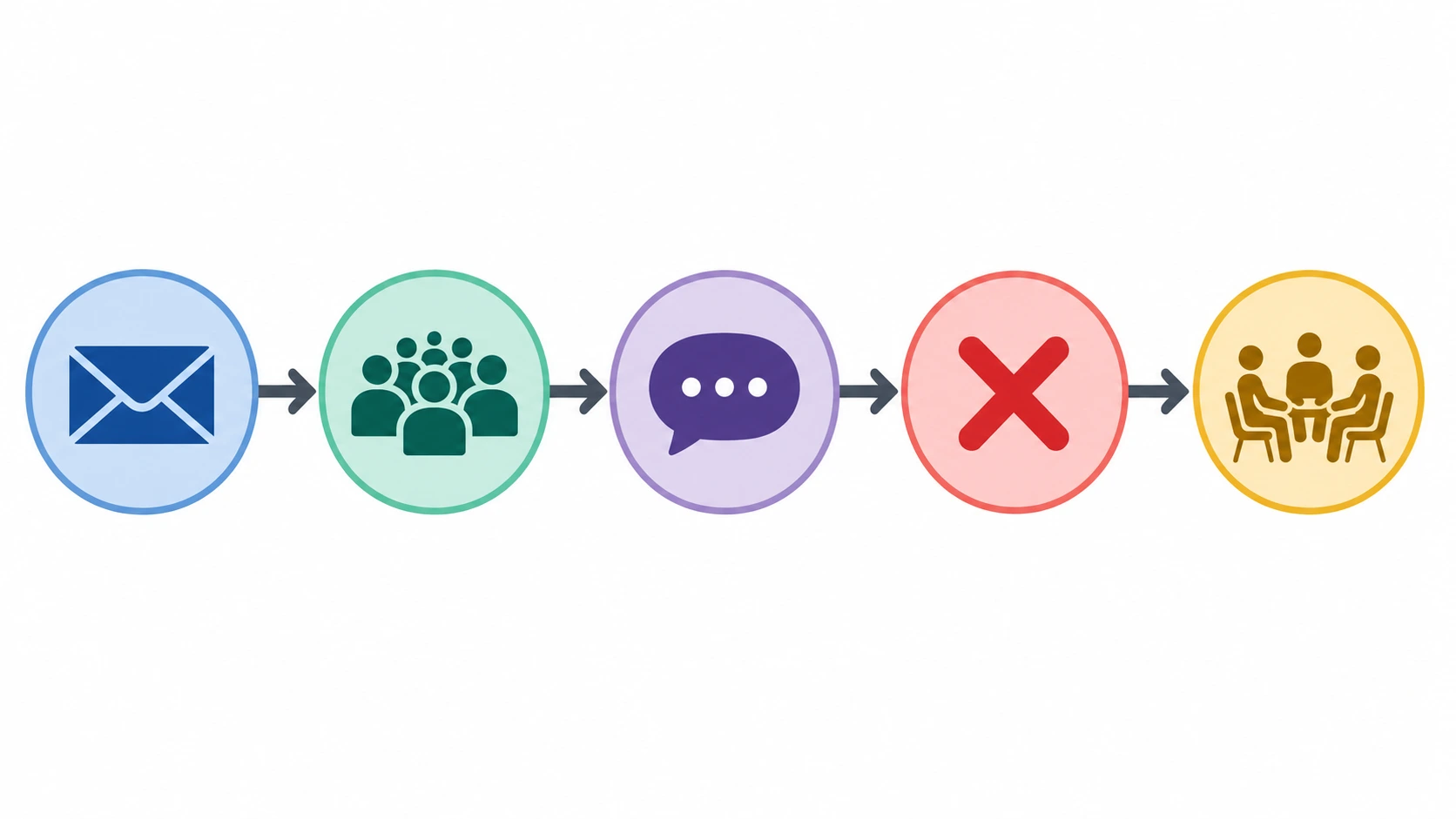
The Jury Selection Process, Explained
How does the jury selection process work? Follow it end to end — summons, panel, voir dire, challenges, and seating — with a Florida-specific guide.
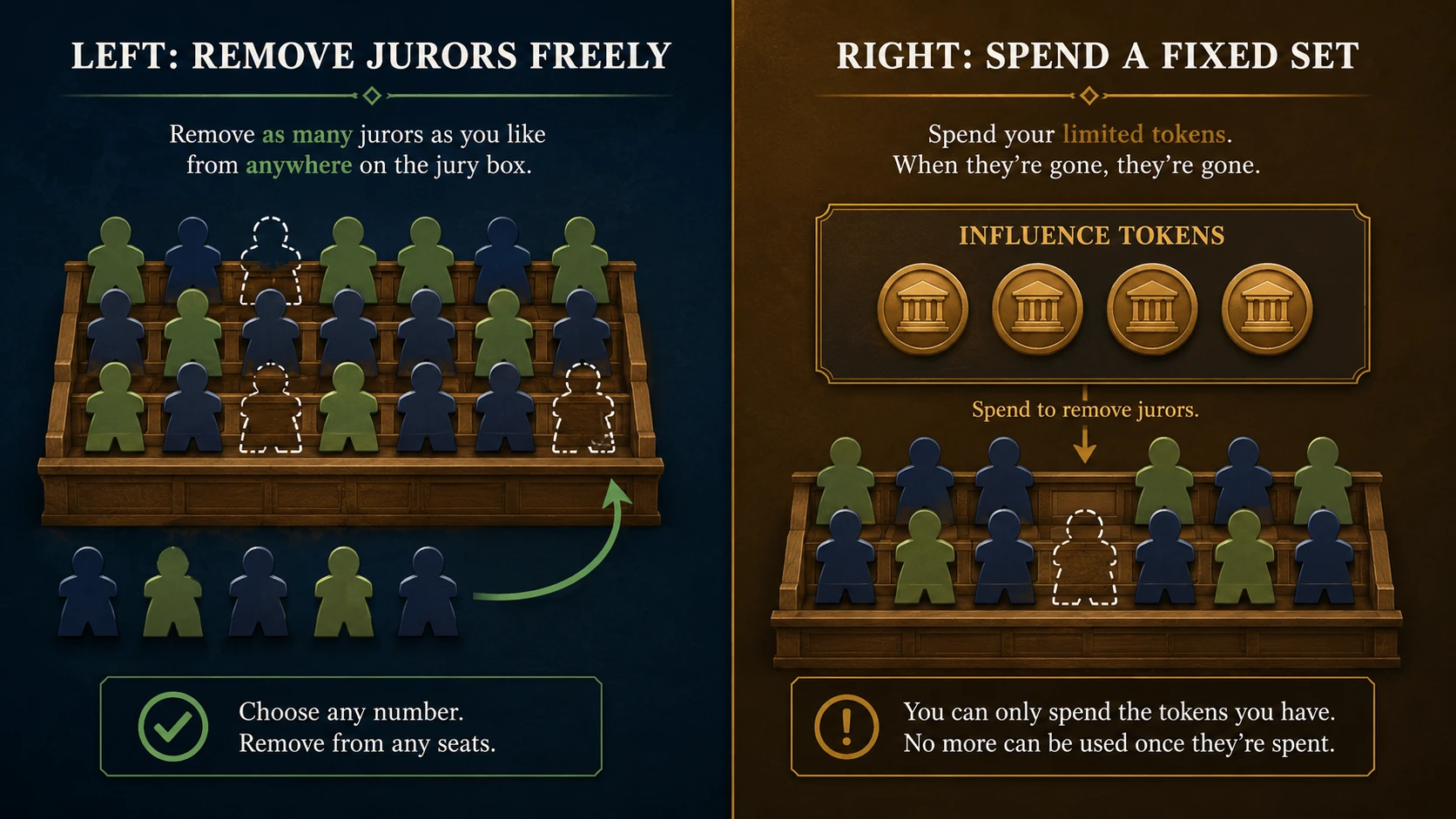
Why Jurors Get Dismissed: For-Cause vs. Peremptory Strikes
Why do jurors get dismissed? A clear guide to for-cause vs. peremptory strikes, Batson limits, how many challenges each side gets, and strike strategy.
See how PeerProbe handles ethical juror research
PeerProbe conducts only ethics-compliant, passive juror research — and documents everything for your file.
Request a Demo