Social Media Research on Prospective Jurors: What Every Attorney Needs to Know
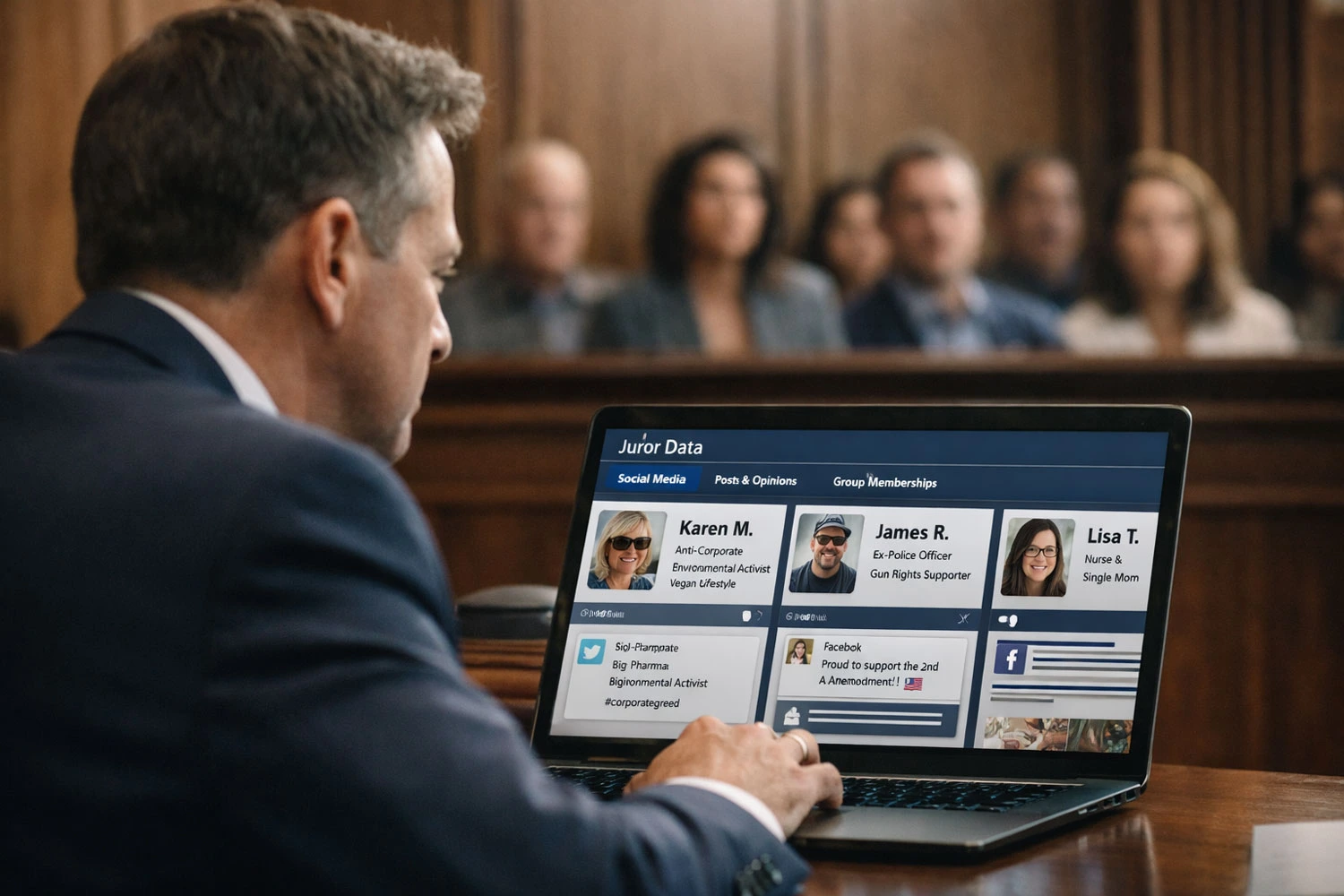
Passive social media research is permissible — but the line between research and contact is thinner than most attorneys realize.
Jury selection has always been the first battleground of trial strategy. But in the digital age, that battleground now extends well beyond the courtroom. Every prospective juror walks in carrying a public digital footprint — years of posts, likes, group memberships, and opinions — and the question is no longer whether attorneys should look, but how to do it right.
Social media research on prospective jurors is now a standard part of trial preparation for serious litigators. But the rules governing what's permissible are nuanced, jurisdiction-specific, and still evolving. Get it right, and you gain intelligence that voir dire alone can never surface. Get it wrong, and you're facing sanctions, a mistrial, or worse.
Why Jurors on Social Media Change Everything About Voir Dire
Jurors don't leave their biases at the courthouse door — they bring them in, fully formed, shaped by everything they've read, shared, and believed for years. The challenge is that voir dire, even at its most thorough, gives attorneys only minutes to surface what may be decades of accumulated perspective.
Social media activity fills that gap. A prospective juror's online presence can reveal bias that voir dire questioning simply won't uncover — not because jurors are necessarily dishonest, but because people don't always recognize their own prejudices. A juror may genuinely believe they can be impartial toward a pharmaceutical company while having spent years sharing articles about corporate malfeasance. A pattern of posts can reveal bias in ways no direct question ever could.
Prior to jury selection, reviewing publicly accessible juror social media — Facebook, Instagram, LinkedIn, Twitter, and beyond — is now considered not just acceptable, but arguably part of an attorney's duty of competent representation.
The American Bar Association addressed this directly. In ABA Formal Opinion 466, the ABA Standing Committee on Ethics and Professional Responsibility confirmed that attorneys may conduct internet research on jurors and review their social media profiles, provided they do so passively and review only information that is publicly available without making contact with the juror.
What Social Media Research on Prospective Jurors Is Actually Permissible
The core principle across virtually all formal guidance is straightforward: passive review of publicly available information about jurors is permissible. Active contact is not.
Under the ABA Model Rules of Professional Conduct — specifically Model Rule 3.5, which governs conduct with jurors and venire members — attorneys are prohibited from communicating with a juror or prospective juror except as permitted by law. This prohibition extends to indirect contact and any conduct that could be construed as an ex parte communication.
What does this mean in practice? An attorney may:
- Conduct social media searches of a prospective juror's name using publicly accessible platforms
- Review posts, shares, group memberships, and public social media information that is visible without logging in or sending a connection request
- Use internet searches to investigate a juror's online presence as it appears to the general public
- Access juror social media profiles that are set to public visibility
What an attorney may not do:
- Send friend requests or connection requests to jurors or prospective jurors
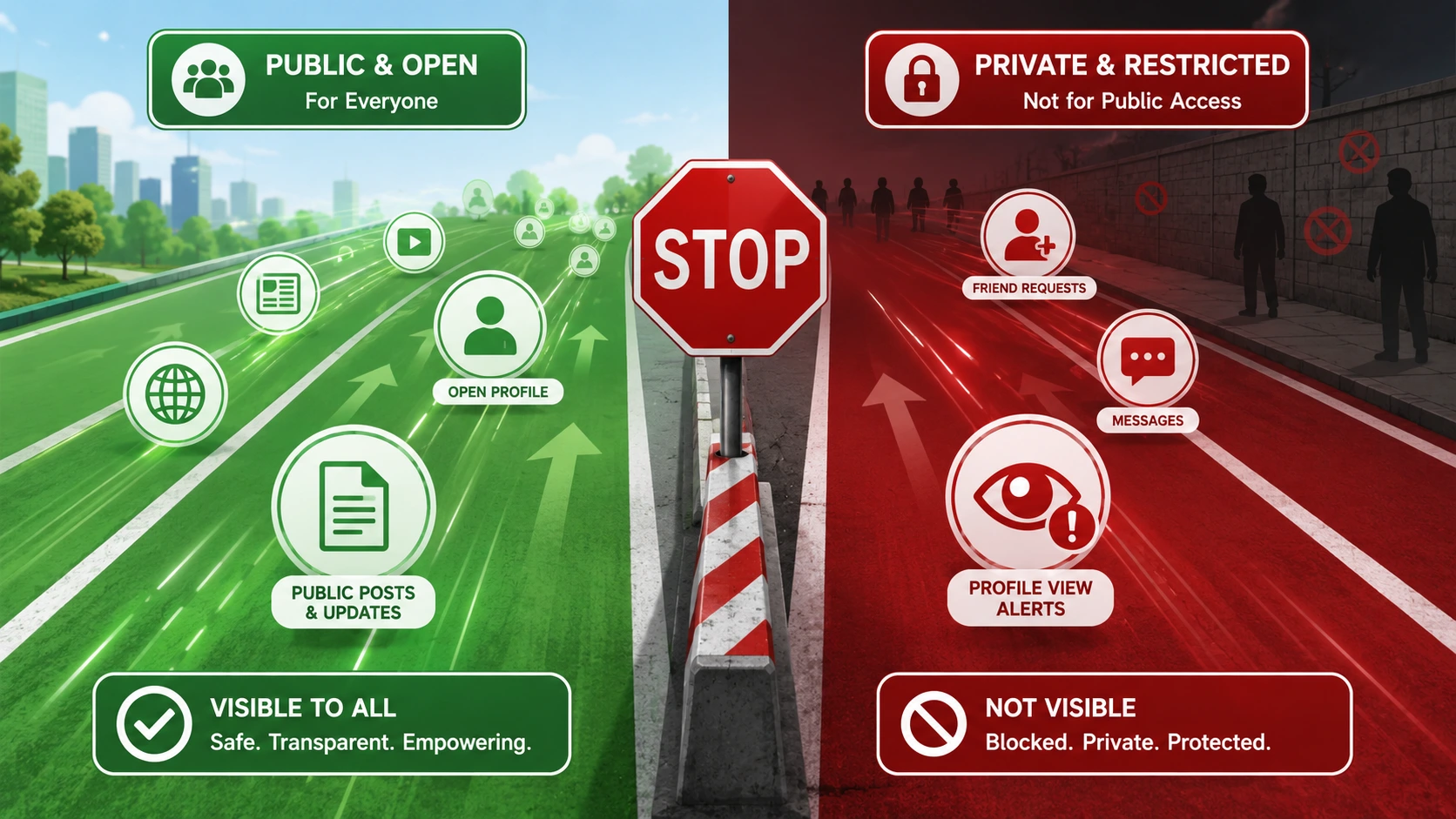
- Use any method that would trigger an automatic notification to the juror that their profile has been viewed
- Attempt to access private or restricted content
- Ask third parties to conduct research that the attorney themselves could not ethically conduct
The New York State Bar Association addressed this in its own formal opinion, as has the Bar Ass'n of San Francisco and ethics authorities in Colorado and California. While the specifics vary, the consensus is consistent: passive public review is generally permissible; anything resembling contact or deception is not.
Attorneys must also be aware that professional responsibility obligations don't end at research. If, during the research process, an attorney discovers information suggesting a juror may have lied during voir dire or is involved in the case in an undisclosed way, there may be a duty to disclose that to the court.
The LinkedIn Problem Every Attorney Should Know About
Of all platforms, LinkedIn presents the most specific and well-documented compliance risk for juror research. The issue is automatic notification.
LinkedIn's default settings notify users when someone has viewed their profile. An attorney who used LinkedIn to look up a prospective juror — even just to review publicly available professional history — may have inadvertently triggered a notification to that juror that they were being researched.
This matters enormously. A notification to a juror that an attorney involved in the case has been reviewing their profile could constitute improper contact, create an appearance of intimidation, or compromise the integrity of the jury selection process. Several state bar ethics opinions have specifically addressed this scenario, and the guidance is clear: attorneys must be careful when using LinkedIn to research jurors precisely because of this automatic notification feature.
The practical implication is that LinkedIn research requires either using a platform setting that prevents profile view notifications (such as browsing in private mode, where available), or avoiding LinkedIn altogether in favor of platforms that don't generate these alerts. ABA Formal Op. 466 specifically flagged this issue, noting that a notification triggered by an attorney's research could itself be treated as an improper communication with a juror.
Rules for Monitoring Jurors During Trial
The ethical obligations around juror social media don't end when the panel is seated. Attorneys may need to monitor jurors during trial — and when they do, a different set of considerations applies.
Many federal and state courts now include a standing order regarding juror social media use, instructing jurors not to use their mobile devices to research the case, post about the proceedings, or seek outside information about the case on social media. Despite these admonitions, jurors during trial sometimes do exactly that.
If an attorney discovers a juror may be using the internet and social media to research information about the case, or posting about the case on social media, attorneys must bring this to the attention of the trial judge immediately. Sitting on that information — or attempting to use it strategically — is itself a professional responsibility violation.
Courts have made clear that access to juror social media activity cuts both ways: it's a tool for identifying biased jurors before and during trial, but it also creates obligations to act when misconduct is uncovered.
The Risk of Getting It Wrong: Sanctions and a New Trial
The consequences of mishandling juror social media research are serious. Courts have imposed sanctions on attorneys who crossed ethical lines, and in some cases, juror social media misconduct — whether by the juror or as a result of improper attorney conduct — has resulted in motions for a new trial being granted.
A sanction can range from a formal reprimand to fee awards to referral to state disciplinary authorities. In cases where improper contact with a juror is found, courts have not hesitated to act. And when a juror's impartiality is compromised, the verdict itself may be at risk on appeal.
The cost of getting this wrong extends beyond the immediate case. An attorney's professional reputation, bar standing, and client relationships are all on the line. That's why having a defensible, documented research process isn't just good practice — it's essential risk management.
How to Conduct Social Media Research Without Crossing the Line
For trial teams looking to use social media responsibly to research prospective jurors, a few clear principles apply:
Stick to what's publicly available. Information that is available without making contact, without logging in, and without triggering any notification is generally permissible. If accessing information requires any form of connection or communication with the juror, it's off-limits.
Never send friend requests. This is an absolute line. Sending a connection or friend request to a prospective juror — even through a third party — constitutes attempted contact and is prohibited under Model Rule 3.5 and its equivalents across jurisdictions.
Document your process. Maintain a clear record of what was researched, how, and when. If your research process is ever questioned, a clean audit trail demonstrates compliance with applicable ethical rules.
Know your jurisdiction. State bar guidance on juror research varies. Some jurisdictions have issued specific formal opinions beyond the ABA Model framework. Check your state bar's ethics guidance before trial, especially if you're practicing across multiple jurisdictions.
Be alert to privacy setting changes. If a juror adjusts their privacy settings after juror names are released and social media searches begin, that itself may be relevant. Courts and commentators have discussed what it means when a juror adjusts their privacy settings after receiving a jury summons. While not itself a violation, it is information worth tracking.
Act on what you find. If social media information reveals that a juror may have lied during voir dire, or that a seated juror is researching the case, those are disclosure obligations — not strategic opportunities.
How Technology Is Solving the Compliance Problem for Trial Teams
The practical challenge for most trial teams is that conducting thorough social media research on an entire jury pool — correctly, compliantly, and under time pressure — is genuinely difficult to do manually. The risk of cutting corners, accidentally triggering a notification, or missing something critical is real.
That's where purpose-built tools make a meaningful difference. Rather than relying on attorneys to conduct individual internet searches and manually review social media accounts across multiple platforms, dedicated platforms automate the process in a way that is designed to remain passive and leave no footprint.
PeerProbe's Social Media Review feature was built specifically for this. It surfaces publicly available posts, shares, and group memberships from Facebook, Instagram, LinkedIn, Reddit, X, and news comment sections — all without triggering notifications, sending connection requests, or making any form of contact with the juror. Every finding is documented with source URLs, timestamps, and AI-generated case-impact summaries, giving trial teams both the intelligence and the audit trail they need.
For jury consultants and in-house trial teams alike, this approach eliminates the manual compliance risk while ensuring that no juror's public digital footprint goes unreviewed.
Conclusion
Social media research on prospective jurors is no longer optional for trial attorneys who want to make fully informed jury selection decisions. The intelligence available through a juror's online presence — their opinions, associations, biases, and behaviors — can be decisive. But that intelligence is only valuable if it's gathered in a way that is ethical, defensible, and compliant with the rules of professional responsibility in your jurisdiction.
The framework is clear: passive review of publicly available information is permissible; anything resembling contact is not. LinkedIn's automatic notification feature demands extra caution. Jurors during trial must be monitored responsibly, with disclosure obligations taken seriously. And the consequences of getting it wrong — from sanctions to a new trial — are too significant to ignore.
For further reading, see ABA Formal Opinion 466 on juror investigation via social media, and the New York State Bar Association's guidance on social media ethics for attorneys.
Related articles
Is It Legal to Research Jurors Online in Florida?
Is it legal to research jurors online? Yes — public info only, no contact. The Florida rules, ABA Op. 466, and the bright lines every attorney must know.

The Ethical Rules for Researching Jurors: What Every Attorney Must Know Before Jury Selection
A breakdown of the legal and ethical framework governing juror research — covering ABA Formal Opinion 466, state bar guidance, the automated notification problem, and your disclosure obligations when research uncovers misconduct.
Juror Social Media Research: Ethics Rules for Attorneys
Juror social media research ethics, explained: platform-by-platform passive-review rules, the LinkedIn notification trap, and how to document compliance.
See how PeerProbe handles ethical juror research
PeerProbe conducts only ethics-compliant, passive juror research — and documents everything for your file.
Request a Demo